

Freudenberg Sealing Technologies
Dichtomatik N70450 O-Ring, 450 Dash Number, 10.475 in ID x 11.025 in OD, Nitrile Rubber, 70 Shore A Durometer, Import
O-rings are closed circular rings of circular cross-section. They are made through vulcanization from form tools as a complete ring. The sealing function of the O-ring is achieved by the deformation of the cross-section when installed and compressed in its housing. The O-ring can be compressed either radially or axially in its installation housing. In operating conditions the pressure exerted by the media reinforces the sealing function, as under pressure the elastomer material functions as a non-compressible fluid.
Dichtomatik N70453 O-Ring, 453 Dash Number, 11.975 in ID x 12.525 in OD, Nitrile Rubber, 70 Shore A Durometer, Import, Custom 453
O-rings are closed circular rings of circular cross-section. They are made through vulcanization from form tools as a complete ring. The sealing function of the O-ring is achieved by the deformation of the cross-section when installed and compressed in its housing. The O-ring can be compressed either radially or axially in its installation housing. In operating conditions the pressure exerted by the media reinforces the sealing function, as under pressure the elastomer material functions as a non-compressible fluid.
Dichtomatik N70457 O-Ring, 457 Dash Number, 13.975 in ID x 14.525 in OD, Nitrile Rubber, 70 Shore A Durometer, Import, Custom 457
O-rings are closed circular rings of circular cross-section. They are made through vulcanization from form tools as a complete ring. The sealing function of the O-ring is achieved by the deformation of the cross-section when installed and compressed in its housing. The O-ring can be compressed either radially or axially in its installation housing. In operating conditions the pressure exerted by the media reinforces the sealing function, as under pressure the elastomer material functions as a non-compressible fluid.
Dichtomatik N70458 O-Ring, 458 Dash Number, 14.475 in ID x 15.025 in OD, Nitrile Rubber, 70 Shore A Durometer, Import, Custom 458
O-rings are closed circular rings of circular cross-section. They are made through vulcanization from form tools as a complete ring. The sealing function of the O-ring is achieved by the deformation of the cross-section when installed and compressed in its housing. The O-ring can be compressed either radially or axially in its installation housing. In operating conditions the pressure exerted by the media reinforces the sealing function, as under pressure the elastomer material functions as a non-compressible fluid.
Dichtomatik N70461 O-Ring, 461 Dash Number, 15.955 in ID x 16.505 in OD, Nitrile Rubber, 70 Shore A Durometer, Import, Custom 461
O-rings are closed circular rings of circular cross-section. They are made through vulcanization from form tools as a complete ring. The sealing function of the O-ring is achieved by the deformation of the cross-section when installed and compressed in its housing. The O-ring can be compressed either radially or axially in its installation housing. In operating conditions the pressure exerted by the media reinforces the sealing function, as under pressure the elastomer material functions as a non-compressible fluid.
Dichtomatik N70463 O-Ring, 463 Dash Number, 16.955 in ID x 17.505 in OD, Nitrile Rubber, 70 Shore A Durometer, Import, Custom 463
O-rings are closed circular rings of circular cross-section. They are made through vulcanization from form tools as a complete ring. The sealing function of the O-ring is achieved by the deformation of the cross-section when installed and compressed in its housing. The O-ring can be compressed either radially or axially in its installation housing. In operating conditions the pressure exerted by the media reinforces the sealing function, as under pressure the elastomer material functions as a non-compressible fluid.
Dichtomatik N90129 O-Ring, 129 Dash Number, 1.549 in ID x 1.755 in OD, Nitrile Rubber, 90 Shore A Durometer, Import, Custom 129-BUNA-90
O-rings are closed circular rings of circular cross-section. They are made through vulcanization from form tools as a complete ring. The sealing function of the O-ring is achieved by the deformation of the cross-section when installed and compressed in its housing. The O-ring can be compressed either radially or axially in its installation housing. In operating conditions the pressure exerted by the media reinforces the sealing function, as under pressure the elastomer material functions as a non-compressible fluid.
Dichtomatik S70011 O-Ring, 011 Dash Number, 0.301 in ID x 0.441 in OD, Silicone Rubber, 70 Shore A Durometer, Import
O-rings are closed circular rings of circular cross-section. They are made through vulcanization from form tools as a complete ring. The sealing function of the O-ring is achieved by the deformation of the cross-section when installed and compressed in its housing. The O-ring can be compressed either radially or axially in its installation housing. In operating conditions the pressure exerted by the media reinforces the sealing function, as under pressure the elastomer material functions as a non-compressible fluid.
Dichtomatik S70111 O-Ring, 111 Dash Number, 0.424 in ID x 0.63 in OD, Silicone Rubber, 70 Shore A Durometer, Import
O-rings are closed circular rings of circular cross-section. They are made through vulcanization from form tools as a complete ring. The sealing function of the O-ring is achieved by the deformation of the cross-section when installed and compressed in its housing. The O-ring can be compressed either radially or axially in its installation housing. In operating conditions the pressure exerted by the media reinforces the sealing function, as under pressure the elastomer material functions as a non-compressible fluid.
Dichtomatik S70113 O-Ring, 113 Dash Number, 0.549 in ID x 0.755 in OD, Silicone Rubber, 70 Shore A Durometer, Import
O-rings are closed circular rings of circular cross-section. They are made through vulcanization from form tools as a complete ring. The sealing function of the O-ring is achieved by the deformation of the cross-section when installed and compressed in its housing. The O-ring can be compressed either radially or axially in its installation housing. In operating conditions the pressure exerted by the media reinforces the sealing function, as under pressure the elastomer material functions as a non-compressible fluid.
Dichtomatik S70114 O-Ring, 114 Dash Number, 0.612 in ID x 0.818 in OD, Silicone Rubber, 70 Shore A Durometer, Import
O-rings are closed circular rings of circular cross-section. They are made through vulcanization from form tools as a complete ring. The sealing function of the O-ring is achieved by the deformation of the cross-section when installed and compressed in its housing. The O-ring can be compressed either radially or axially in its installation housing. In operating conditions the pressure exerted by the media reinforces the sealing function, as under pressure the elastomer material functions as a non-compressible fluid.
Dichtomatik S70115 O-Ring, 115 Dash Number, 0.674 in ID x 0.88 in OD, Silicone Rubber, 70 Shore A Durometer, Import
O-rings are closed circular rings of circular cross-section. They are made through vulcanization from form tools as a complete ring. The sealing function of the O-ring is achieved by the deformation of the cross-section when installed and compressed in its housing. The O-ring can be compressed either radially or axially in its installation housing. In operating conditions the pressure exerted by the media reinforces the sealing function, as under pressure the elastomer material functions as a non-compressible fluid.
Dichtomatik S70116 O-Ring, 116 Dash Number, 0.737 in ID x 0.943 in OD, Silicone Rubber, 70 Shore A Durometer, Import
O-rings are closed circular rings of circular cross-section. They are made through vulcanization from form tools as a complete ring. The sealing function of the O-ring is achieved by the deformation of the cross-section when installed and compressed in its housing. The O-ring can be compressed either radially or axially in its installation housing. In operating conditions the pressure exerted by the media reinforces the sealing function, as under pressure the elastomer material functions as a non-compressible fluid.
Dichtomatik S70117 O-Ring, 117 Dash Number, 0.799 in ID x 1.005 in OD, Silicone Rubber, 70 Shore A Durometer, Import
O-rings are closed circular rings of circular cross-section. They are made through vulcanization from form tools as a complete ring. The sealing function of the O-ring is achieved by the deformation of the cross-section when installed and compressed in its housing. The O-ring can be compressed either radially or axially in its installation housing. In operating conditions the pressure exerted by the media reinforces the sealing function, as under pressure the elastomer material functions as a non-compressible fluid.
Dichtomatik S70120 O-Ring, 120 Dash Number, 0.987 in ID x 1.193 in OD, Silicone Rubber, 70 Shore A Durometer, Import
O-rings are closed circular rings of circular cross-section. They are made through vulcanization from form tools as a complete ring. The sealing function of the O-ring is achieved by the deformation of the cross-section when installed and compressed in its housing. The O-ring can be compressed either radially or axially in its installation housing. In operating conditions the pressure exerted by the media reinforces the sealing function, as under pressure the elastomer material functions as a non-compressible fluid.
Dichtomatik S70234 O-Ring, 234 Dash Number, 2.984 in ID x 3.262 in OD, Silicone Rubber, 70 Shore A Durometer, Import, Custom 234-SILICONE
O-rings are closed circular rings of circular cross-section. They are made through vulcanization from form tools as a complete ring. The sealing function of the O-ring is achieved by the deformation of the cross-section when installed and compressed in its housing. The O-ring can be compressed either radially or axially in its installation housing. In operating conditions the pressure exerted by the media reinforces the sealing function, as under pressure the elastomer material functions as a non-compressible fluid.
Dichtomatik S70350 O-Ring, 350 Dash Number, 4.6 in ID x 5.02 in OD, Silicone Rubber, 70 Shore A Durometer, Import
O-rings are closed circular rings of circular cross-section. They are made through vulcanization from form tools as a complete ring. The sealing function of the O-ring is achieved by the deformation of the cross-section when installed and compressed in its housing. The O-ring can be compressed either radially or axially in its installation housing. In operating conditions the pressure exerted by the media reinforces the sealing function, as under pressure the elastomer material functions as a non-compressible fluid.
Dichtomatik S70351 O-Ring, 351 Dash Number, 4.725 in ID x 5.145 in OD, Silicone Rubber, 70 Shore A Durometer, Import
O-rings are closed circular rings of circular cross-section. They are made through vulcanization from form tools as a complete ring. The sealing function of the O-ring is achieved by the deformation of the cross-section when installed and compressed in its housing. The O-ring can be compressed either radially or axially in its installation housing. In operating conditions the pressure exerted by the media reinforces the sealing function, as under pressure the elastomer material functions as a non-compressible fluid.
Dichtomatik S70427 O-Ring, 427 Dash Number, 4.725 in ID x 5.275 in OD, Silicone Rubber, 70 Shore A Durometer, Import
O-rings are closed circular rings of circular cross-section. They are made through vulcanization from form tools as a complete ring. The sealing function of the O-ring is achieved by the deformation of the cross-section when installed and compressed in its housing. The O-ring can be compressed either radially or axially in its installation housing. In operating conditions the pressure exerted by the media reinforces the sealing function, as under pressure the elastomer material functions as a non-compressible fluid.
Dichtomatik V4.00X048 O-Ring, 48 mm ID x 56 mm OD, FKM, 80 Shore A Durometer, Import
O-rings are endless, ring shaped sealing elements with a circular cross-section that are manufactured from elastomer materials or PTFE. The designation of an O-ring is derived from the dimensions of its inner diameter and cord width in millimeters, along with the name of the material and its Shore A hardness.
Dichtomatik V75141 O-Ring, 141 Dash Number, 2.3 in ID x 2.506 in OD, FKM, 75 Shore A Durometer, Import, Custom 141-VITON
O-rings are closed circular rings of circular cross-section. They are made through vulcanization from form tools as a complete ring. The sealing function of the O-ring is achieved by the deformation of the cross-section when installed and compressed in its housing. The O-ring can be compressed either radially or axially in its installation housing. In operating conditions the pressure exerted by the media reinforces the sealing function, as under pressure the elastomer material functions as a non-compressible fluid.
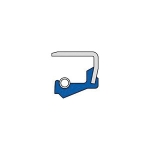
FREUDENBERG Simmering® 110X130X12B1N B1 Single Lip Oil Seal, 110 mm ID x 130 mm OD, 12 mm W, NBR Lip, 72 Durometer, Transcom 12 X 24 X 6-TC
FREUDENBERG Simmering® 110X130X12B1N B1 Single Lip Oil Seal, 110 mm ID x 130 mm OD, 12 mm W, NBR Lip, 72 Durometer
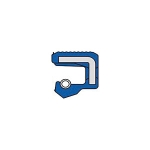
FREUDENBERG Simmering® 230X260X15BAN BA Series Oil Seal, 230 mm ID x 260 mm OD, 15 mm W, NBR Lip, 72 Durometer, Import, Transcom 45X72X12-TC
Standard types according to DIN 3760, with outer elastomer sleeve, with and without additional dust lip (SL) to protect against light to medium levels of exterior soiling. Available in various designs and materials.
FREUDENBERG Simmering® 75003654 B1 Oil Seal, 42 mm ID x 72 mm OD, 8 mm W, NBR Lip, 72 Durometer, Transcom 12X18X4.5-TC
FREUDENBERG Simmering® 12X18X4.5TC-BX B1 Oil Seal, 42 mm ID x 72 mm OD, 8 mm W, NBR Lip, 72 Durometer
Recently Viewed
4" X 36-YD WHITE AISLE MARKING TAPE-UTCUT00W4 >

THESE BELTS FOLLOW A CLASSICAL V-BELT PROFILE, WHICH ENSURES COMPATIBILITY WITH A VARIETY OF STANDARD PULLEY SYSTEMS. THE WRAPPED CONSTRUCTION PRVIDES ENHANCED PROTECTION AGAINST ENVIRONMENTAL FACTORS. THEY ARE MADE OF RUBBER COMPOUNDS AND STRONG TENSION MEMBERS. THEY ARE RESISTANT TO HEAT AND OIL AND STATIC.
- PIXC162>
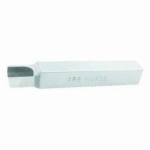
MORSE® 70121 4110 Premium Tool Bit, Carbide Tip, 370E Tip Material Grade, A Style, 7/16 in H x 7/16 in W Shank, 3 in OAL, Right Hand Cutting, Industry Standard Number: AR-7
1-3/16" -IDX1-3/8" -OD O-RING
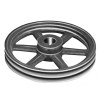
SINGLE GROOVE 1/2" -ID A OR B-BELT CAST IRON H-BUSHING SHEAVES-BRWBK30X1/2 >

44-GALLON WHITE TRASH CAN LIDS

