

O-Rings
Dichtomatik N70354 O-Ring, 354 Dash Number, 5.1 in ID x 5.52 in OD, Nitrile Rubber, 70 Shore A Durometer, Import
O-rings are closed circular rings of circular cross-section. They are made through vulcanization from form tools as a complete ring. The sealing function of the O-ring is achieved by the deformation of the cross-section when installed and compressed in its housing. The O-ring can be compressed either radially or axially in its installation housing. In operating conditions the pressure exerted by the media reinforces the sealing function, as under pressure the elastomer material functions as a non-compressible fluid.
Dichtomatik N70357 O-Ring, 357 Dash Number, 5.475 in ID x 5.895 in OD, Nitrile Rubber, 70 Shore A Durometer, Import
O-rings are closed circular rings of circular cross-section. They are made through vulcanization from form tools as a complete ring. The sealing function of the O-ring is achieved by the deformation of the cross-section when installed and compressed in its housing. The O-ring can be compressed either radially or axially in its installation housing. In operating conditions the pressure exerted by the media reinforces the sealing function, as under pressure the elastomer material functions as a non-compressible fluid.
Dichtomatik N70360 O-Ring, 360 Dash Number, 5.85 in ID x 6.27 in OD, Nitrile Rubber, 70 Shore A Durometer, Import
O-rings are closed circular rings of circular cross-section. They are made through vulcanization from form tools as a complete ring. The sealing function of the O-ring is achieved by the deformation of the cross-section when installed and compressed in its housing. The O-ring can be compressed either radially or axially in its installation housing. In operating conditions the pressure exerted by the media reinforces the sealing function, as under pressure the elastomer material functions as a non-compressible fluid.
Dichtomatik N70364 O-Ring, 364 Dash Number, 6.725 in ID x 7.145 in OD, Nitrile Rubber, 70 Shore A Durometer, Import
O-rings are closed circular rings of circular cross-section. They are made through vulcanization from form tools as a complete ring. The sealing function of the O-ring is achieved by the deformation of the cross-section when installed and compressed in its housing. The O-ring can be compressed either radially or axially in its installation housing. In operating conditions the pressure exerted by the media reinforces the sealing function, as under pressure the elastomer material functions as a non-compressible fluid.
Dichtomatik N70366 O-Ring, 366 Dash Number, 7.225 in ID x 7.645 in OD, Nitrile Rubber, 70 Shore A Durometer, Import
O-rings are closed circular rings of circular cross-section. They are made through vulcanization from form tools as a complete ring. The sealing function of the O-ring is achieved by the deformation of the cross-section when installed and compressed in its housing. The O-ring can be compressed either radially or axially in its installation housing. In operating conditions the pressure exerted by the media reinforces the sealing function, as under pressure the elastomer material functions as a non-compressible fluid.
Dichtomatik N70376 O-Ring, 376 Dash Number, 9.725 in ID x 10.145 in OD, Nitrile Rubber, 70 Shore A Durometer, Import
O-rings are closed circular rings of circular cross-section. They are made through vulcanization from form tools as a complete ring. The sealing function of the O-ring is achieved by the deformation of the cross-section when installed and compressed in its housing. The O-ring can be compressed either radially or axially in its installation housing. In operating conditions the pressure exerted by the media reinforces the sealing function, as under pressure the elastomer material functions as a non-compressible fluid.
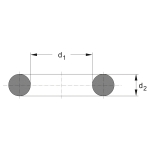
Dichtomatik N70404 O-Ring, 404 Dash Number, 1.85 in ID, Nitrile Rubber, 70 Shore A Durometer
O-rings are closed circular rings of circular cross-section. They are made through vulcanization from form tools as a complete ring. The sealing function of the O-ring is achieved by the deformation of the cross-section when installed and compressed in its housing. The O-ring can be compressed either radially or axially in its installation housing. In operating conditions the pressure exerted by the media reinforces the sealing function, as under pressure the elastomer material functions as a non-compressible fluid.
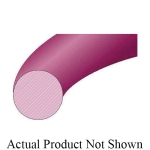
Dichtomatik N70407 O-Ring, 407 Dash Number, 2.225 in ID, Nitrile Rubber, 70 Shore A Durometer
O-rings are closed circular rings of circular cross-section. They are made through vulcanization from form tools as a complete ring. The sealing function of the O-ring is achieved by the deformation of the cross-section when installed and compressed in its housing. The O-ring can be compressed either radially or axially in its installation housing. In operating conditions the pressure exerted by the media reinforces the sealing function, as under pressure the elastomer material functions as a non-compressible fluid.
Dichtomatik N70432 O-Ring, 432 Dash Number, 5.35 in ID x 5.9 in OD, Nitrile Rubber, 70 Shore A Durometer, Import
O-rings are closed circular rings of circular cross-section. They are made through vulcanization from form tools as a complete ring. The sealing function of the O-ring is achieved by the deformation of the cross-section when installed and compressed in its housing. The O-ring can be compressed either radially or axially in its installation housing. In operating conditions the pressure exerted by the media reinforces the sealing function, as under pressure the elastomer material functions as a non-compressible fluid.
Dichtomatik N70433 O-Ring, 433 Dash Number, 5.475 in ID x 6.025 in OD, Nitrile Rubber, 70 Shore A Durometer, Import
O-rings are closed circular rings of circular cross-section. They are made through vulcanization from form tools as a complete ring. The sealing function of the O-ring is achieved by the deformation of the cross-section when installed and compressed in its housing. The O-ring can be compressed either radially or axially in its installation housing. In operating conditions the pressure exerted by the media reinforces the sealing function, as under pressure the elastomer material functions as a non-compressible fluid.
Dichtomatik N70435 O-Ring, 435 Dash Number, 5.725 in ID x 6.275 in OD, Nitrile Rubber, 70 Shore A Durometer, Import
O-rings are closed circular rings of circular cross-section. They are made through vulcanization from form tools as a complete ring. The sealing function of the O-ring is achieved by the deformation of the cross-section when installed and compressed in its housing. The O-ring can be compressed either radially or axially in its installation housing. In operating conditions the pressure exerted by the media reinforces the sealing function, as under pressure the elastomer material functions as a non-compressible fluid.
Dichtomatik N70437 O-Ring, 437 Dash Number, 5.975 in ID x 6.525 in OD, Nitrile Rubber, 70 Shore A Durometer, Import
O-rings are closed circular rings of circular cross-section. They are made through vulcanization from form tools as a complete ring. The sealing function of the O-ring is achieved by the deformation of the cross-section when installed and compressed in its housing. The O-ring can be compressed either radially or axially in its installation housing. In operating conditions the pressure exerted by the media reinforces the sealing function, as under pressure the elastomer material functions as a non-compressible fluid.
Dichtomatik N70438 O-Ring, 438 Dash Number, 6.225 in ID x 6.775 in OD, Nitrile Rubber, 70 Shore A Durometer, Import
O-rings are closed circular rings of circular cross-section. They are made through vulcanization from form tools as a complete ring. The sealing function of the O-ring is achieved by the deformation of the cross-section when installed and compressed in its housing. The O-ring can be compressed either radially or axially in its installation housing. In operating conditions the pressure exerted by the media reinforces the sealing function, as under pressure the elastomer material functions as a non-compressible fluid.
Dichtomatik N70440 O-Ring, 440 Dash Number, 6.725 in ID x 7.275 in OD, Nitrile Rubber, 70 Shore A Durometer, Import
O-rings are closed circular rings of circular cross-section. They are made through vulcanization from form tools as a complete ring. The sealing function of the O-ring is achieved by the deformation of the cross-section when installed and compressed in its housing. The O-ring can be compressed either radially or axially in its installation housing. In operating conditions the pressure exerted by the media reinforces the sealing function, as under pressure the elastomer material functions as a non-compressible fluid.
Dichtomatik N70443 O-Ring, 443 Dash Number, 7.475 in ID x 8.025 in OD, Nitrile Rubber, 70 Shore A Durometer, Import
O-rings are closed circular rings of circular cross-section. They are made through vulcanization from form tools as a complete ring. The sealing function of the O-ring is achieved by the deformation of the cross-section when installed and compressed in its housing. The O-ring can be compressed either radially or axially in its installation housing. In operating conditions the pressure exerted by the media reinforces the sealing function, as under pressure the elastomer material functions as a non-compressible fluid.
Dichtomatik N70449 O-Ring, 449 Dash Number, 9.975 in ID x 10.525 in OD, Nitrile Rubber, 70 Shore A Durometer, Import
O-rings are closed circular rings of circular cross-section. They are made through vulcanization from form tools as a complete ring. The sealing function of the O-ring is achieved by the deformation of the cross-section when installed and compressed in its housing. The O-ring can be compressed either radially or axially in its installation housing. In operating conditions the pressure exerted by the media reinforces the sealing function, as under pressure the elastomer material functions as a non-compressible fluid.
Dichtomatik N70450 O-Ring, 450 Dash Number, 10.475 in ID x 11.025 in OD, Nitrile Rubber, 70 Shore A Durometer, Import
O-rings are closed circular rings of circular cross-section. They are made through vulcanization from form tools as a complete ring. The sealing function of the O-ring is achieved by the deformation of the cross-section when installed and compressed in its housing. The O-ring can be compressed either radially or axially in its installation housing. In operating conditions the pressure exerted by the media reinforces the sealing function, as under pressure the elastomer material functions as a non-compressible fluid.
O-rings are closed circular rings of circular cross-section. They are made through vulcanization from form tools as a complete ring. The sealing function of the O-ring is achieved by the deformation of the cross-section when installed and compressed in its housing. The O-ring can be compressed either radially or axially in its installation housing. In operating conditions the pressure exerted by the media reinforces the sealing function, as under pressure the elastomer material functions as a non-compressible fluid.
O-rings are closed circular rings of circular cross-section. They are made through vulcanization from form tools as a complete ring. The sealing function of the O-ring is achieved by the deformation of the cross-section when installed and compressed in its housing. The O-ring can be compressed either radially or axially in its installation housing. In operating conditions the pressure exerted by the media reinforces the sealing function, as under pressure the elastomer material functions as a non-compressible fluid.
O-rings are closed circular rings of circular cross-section. They are made through vulcanization from form tools as a complete ring. The sealing function of the O-ring is achieved by the deformation of the cross-section when installed and compressed in its housing. The O-ring can be compressed either radially or axially in its installation housing. In operating conditions the pressure exerted by the media reinforces the sealing function, as under pressure the elastomer material functions as a non-compressible fluid.
O-rings are closed circular rings of circular cross-section. They are made through vulcanization from form tools as a complete ring. The sealing function of the O-ring is achieved by the deformation of the cross-section when installed and compressed in its housing. The O-ring can be compressed either radially or axially in its installation housing. In operating conditions the pressure exerted by the media reinforces the sealing function, as under pressure the elastomer material functions as a non-compressible fluid.
O-rings are closed circular rings of circular cross-section. They are made through vulcanization from form tools as a complete ring. The sealing function of the O-ring is achieved by the deformation of the cross-section when installed and compressed in its housing. The O-ring can be compressed either radially or axially in its installation housing. In operating conditions the pressure exerted by the media reinforces the sealing function, as under pressure the elastomer material functions as a non-compressible fluid.
O-rings are closed circular rings of circular cross-section. They are made through vulcanization from form tools as a complete ring. The sealing function of the O-ring is achieved by the deformation of the cross-section when installed and compressed in its housing. The O-ring can be compressed either radially or axially in its installation housing. In operating conditions the pressure exerted by the media reinforces the sealing function, as under pressure the elastomer material functions as a non-compressible fluid.
Dichtomatik S70011 O-Ring, 011 Dash Number, 0.301 in ID x 0.441 in OD, Silicone Rubber, 70 Shore A Durometer, Import
O-rings are closed circular rings of circular cross-section. They are made through vulcanization from form tools as a complete ring. The sealing function of the O-ring is achieved by the deformation of the cross-section when installed and compressed in its housing. The O-ring can be compressed either radially or axially in its installation housing. In operating conditions the pressure exerted by the media reinforces the sealing function, as under pressure the elastomer material functions as a non-compressible fluid.
Recently Viewed
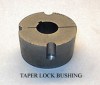
1-1-1/16" -ID TAPER-LOCK BUSHING-BRW3030X111/16 >
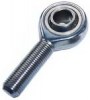
3/8" 2-PIECE LEFT HAND MALE ROD ENDS-QAPCML6 >
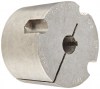
1-5/16" -ID 1615-STYLE TAPER-LOCK BUSHING-BRW1615X1.5/16 >

Mayhew™ 14120 58-C Pry Bar, Curved Tip, 58 in OAL, Steel
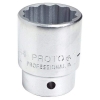
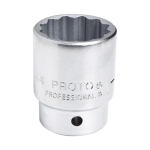
Proto® TorquePlus™ J5560 Standard Length Socket, Imperial, 3/4 in Square Drive, 1-7/8 in
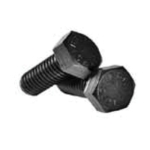
BBI 846637 Fully Threaded Cap Screw, 1-1/4-7, 3 in L Under Head, 5 Grade, Medium Carbon Steel, Plain
BBI 846637 Fully Threaded Cap Screw, 1-1/4-7, 3 in L Under Head, 5 Grade, Medium Carbon Steel, Plain

