

O-Rings
Dichtomatik N2.50X016 O-Ring, 16 mm ID x 21 mm OD, Nitrile Rubber, 70 Shore A Durometer, Import, Custom H-2.5 X 16
O-rings are closed circular rings of circular cross-section. They are made through vulcanization from form tools as a complete ring. The sealing function of the O-ring is achieved by the deformation of the cross-section when installed and compressed in its housing. The O-ring can be compressed either radially or axially in its installation housing. In operating conditions the pressure exerted by the media reinforces the sealing function, as under pressure the elastomer material functions as a non-compressible fluid.
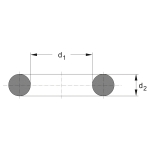
Dichtomatik N1.00X031.8 O-Ring, 31.8 mm ID, Nitrile Rubber, 70 Shore A Durometer, Custom H-1 x 31.80
O-rings are closed circular rings of circular cross-section. They are made through vulcanization from form tools as a complete ring. The sealing function of the O-ring is achieved by the deformation of the cross-section when installed and compressed in its housing. The O-ring can be compressed either radially or axially in its installation housing. In operating conditions the pressure exerted by the media reinforces the sealing function, as under pressure the elastomer material functions as a non-compressible fluid.
Dichtomatik 75189232 O-Ring, 47 mm ID x 52 mm OD, Nitrile Rubber, 70 Shore A Durometer, Import, Custom H-2.5 X 47
O-rings are closed circular rings of circular cross-section. They are made through vulcanization from form tools as a complete ring. The sealing function of the O-ring is achieved by the deformation of the cross-section when installed and compressed in its housing. The O-ring can be compressed either radially or axially in its installation housing. In operating conditions the pressure exerted by the media reinforces the sealing function, as under pressure the elastomer material functions as a non-compressible fluid.
Dichtomatik 75189227 O-Ring, 19 mm ID x 24 mm OD, Nitrile Rubber, 70 Shore A Durometer, Import, Custom H-2.5 X 19
O-rings are closed circular rings of circular cross-section. They are made through vulcanization from form tools as a complete ring. The sealing function of the O-ring is achieved by the deformation of the cross-section when installed and compressed in its housing. The O-ring can be compressed either radially or axially in its installation housing. In operating conditions the pressure exerted by the media reinforces the sealing function, as under pressure the elastomer material functions as a non-compressible fluid.
Dichtomatik 75144041 O-Ring, 190 mm ID x 200 mm OD, FKM, 80 Shore A Durometer, Import
O-rings are endless, ring shaped sealing elements with a circular cross-section that are manufactured from elastomer materials or PTFE. The designation of an O-ring is derived from the dimensions of its inner diameter and cord width in millimeters, along with the name of the material and its Shore A hardness.
Dichtomatik 75138246 O-Ring, 116 mm ID x 122 mm OD, Nitrile Rubber, 70 Shore A Durometer, Import, Custom H-3 x 116
O-rings are closed circular rings of circular cross-section. They are made through vulcanization from form tools as a complete ring. The sealing function of the O-ring is achieved by the deformation of the cross-section when installed and compressed in its housing. The O-ring can be compressed either radially or axially in its installation housing. In operating conditions the pressure exerted by the media reinforces the sealing function, as under pressure the elastomer material functions as a non-compressible fluid.
Dichtomatik 75127009 O-Ring, 35 mm ID x 40 mm OD, Nitrile Rubber, 70 Shore A Durometer, Import, Custom 2.5-mm x 35-mmt
O-rings are closed circular rings of circular cross-section. They are made through vulcanization from form tools as a complete ring. The sealing function of the O-ring is achieved by the deformation of the cross-section when installed and compressed in its housing. The O-ring can be compressed either radially or axially in its installation housing. In operating conditions the pressure exerted by the media reinforces the sealing function, as under pressure the elastomer material functions as a non-compressible fluid.
Dichtomatik 75125853 O-Ring, 30 mm ID x 36 mm OD, Nitrile Rubber, 70 Shore A Durometer, Import
O-rings are closed circular rings of circular cross-section. They are made through vulcanization from form tools as a complete ring. The sealing function of the O-ring is achieved by the deformation of the cross-section when installed and compressed in its housing. The O-ring can be compressed either radially or axially in its installation housing. In operating conditions the pressure exerted by the media reinforces the sealing function, as under pressure the elastomer material functions as a non-compressible fluid.
Dichtomatik 75122141 O-Ring, 17 mm ID x 22 mm OD, Nitrile Rubber, 70 Shore A Durometer, Import, Custom H-2.5 X 17
O-rings are closed circular rings of circular cross-section. They are made through vulcanization from form tools as a complete ring. The sealing function of the O-ring is achieved by the deformation of the cross-section when installed and compressed in its housing. The O-ring can be compressed either radially or axially in its installation housing. In operating conditions the pressure exerted by the media reinforces the sealing function, as under pressure the elastomer material functions as a non-compressible fluid.
Dichtomatik 75115278 O-Ring, 267 Dash Number, 8.234 in ID x 8.512 in OD, PTFE, 55 Durometer, Import
O-rings are endless, ring shaped sealing elements with a circular cross-section that are manufactured from elastomer materials or PTFE. The designation of an O-ring is derived from the dimensions of its inner diameter and cord width in millimeters, along with the name of the material and its Shore A hardness.
Dichtomatik 75115271 O-Ring, 260 Dash Number, 6.484 in ID x 6.762 in OD, PTFE, 55 Durometer, Import
O-rings are endless, ring shaped sealing elements with a circular cross-section that are manufactured from elastomer materials or PTFE. The designation of an O-ring is derived from the dimensions of its inner diameter and cord width in millimeters, along with the name of the material and its Shore A hardness.
Dichtomatik 75115269 O-Ring, 258 Dash Number, 5.984 in ID x 6.262 in OD, PTFE, 55 Durometer, Import
O-rings are endless, ring shaped sealing elements with a circular cross-section that are manufactured from elastomer materials or PTFE. The designation of an O-ring is derived from the dimensions of its inner diameter and cord width in millimeters, along with the name of the material and its Shore A hardness.
Dichtomatik 75115266 O-Ring, 255 Dash Number, 5.609 in ID x 5.887 in OD, PTFE, 55 Durometer, Import
O-rings are endless, ring shaped sealing elements with a circular cross-section that are manufactured from elastomer materials or PTFE. The designation of an O-ring is derived from the dimensions of its inner diameter and cord width in millimeters, along with the name of the material and its Shore A hardness.
Dichtomatik 75115263 O-Ring, 252 Dash Number, 5.234 in ID x 5.512 in OD, PTFE, 55 Durometer, Import
O-rings are endless, ring shaped sealing elements with a circular cross-section that are manufactured from elastomer materials or PTFE. The designation of an O-ring is derived from the dimensions of its inner diameter and cord width in millimeters, along with the name of the material and its Shore A hardness.
Dichtomatik 75115254 O-Ring, 244 Dash Number, 4.234 in ID x 4.512 in OD, PTFE, 55 Durometer, Import, Custom 244-TEFLON
O-rings are endless, ring shaped sealing elements with a circular cross-section that are manufactured from elastomer materials or PTFE. The designation of an O-ring is derived from the dimensions of its inner diameter and cord width in millimeters, along with the name of the material and its Shore A hardness.
Dichtomatik 75115253 O-Ring, 243 Dash Number, 4.109 in ID x 4.387 in OD, PTFE, 55 Durometer, Import, Custom 243-TEFLON
O-rings are endless, ring shaped sealing elements with a circular cross-section that are manufactured from elastomer materials or PTFE. The designation of an O-ring is derived from the dimensions of its inner diameter and cord width in millimeters, along with the name of the material and its Shore A hardness.
Dichtomatik 75115235 O-Ring, 225 Dash Number, 1.859 in ID x 2.137 in OD, PTFE, 55 Durometer, Import, Custom 225-TEFLON
O-rings are endless, ring shaped sealing elements with a circular cross-section that are manufactured from elastomer materials or PTFE. The designation of an O-ring is derived from the dimensions of its inner diameter and cord width in millimeters, along with the name of the material and its Shore A hardness.
Dichtomatik 75115172 O-Ring, 136 Dash Number, 1.987 in ID x 2.193 in OD, PTFE, 55 Durometer, Import, Custom 136-TEFLON
O-rings are endless, ring shaped sealing elements with a circular cross-section that are manufactured from elastomer materials or PTFE. The designation of an O-ring is derived from the dimensions of its inner diameter and cord width in millimeters, along with the name of the material and its Shore A hardness.
Dichtomatik 75115170 O-Ring, 134 Dash Number, 1.862 in ID x 2.068 in OD, PTFE, 55 Durometer, Import, Custom 134-TEFLON
O-rings are endless, ring shaped sealing elements with a circular cross-section that are manufactured from elastomer materials or PTFE. The designation of an O-ring is derived from the dimensions of its inner diameter and cord width in millimeters, along with the name of the material and its Shore A hardness.
Dichtomatik 75102381 O-Ring, 912 Dash Number, 0.924 in ID x 1.156 in OD, FKM, 75 Shore A Durometer, Import, Custom 912-VITON
O-rings are closed circular rings of circular cross-section. They are made through vulcanization from form tools as a complete ring. The sealing function of the O-ring is achieved by the deformation of the cross-section when installed and compressed in its housing. The O-ring can be compressed either radially or axially in its installation housing. In operating conditions the pressure exerted by the media reinforces the sealing function, as under pressure the elastomer material functions as a non-compressible fluid.
Dichtomatik 75102339 O-Ring, 445 Dash Number, 7.975 in ID x 8.525 in OD, FKM, 75 Shore A Durometer, Import
O-rings are closed circular rings of circular cross-section. They are made through vulcanization from form tools as a complete ring. The sealing function of the O-ring is achieved by the deformation of the cross-section when installed and compressed in its housing. The O-ring can be compressed either radially or axially in its installation housing. In operating conditions the pressure exerted by the media reinforces the sealing function, as under pressure the elastomer material functions as a non-compressible fluid.
Dichtomatik 75102234 O-Ring, 336 Dash Number, 2.85 in ID x 3.27 in OD, FKM, 75 Shore A Durometer, Import
O-rings are closed circular rings of circular cross-section. They are made through vulcanization from form tools as a complete ring. The sealing function of the O-ring is achieved by the deformation of the cross-section when installed and compressed in its housing. The O-ring can be compressed either radially or axially in its installation housing. In operating conditions the pressure exerted by the media reinforces the sealing function, as under pressure the elastomer material functions as a non-compressible fluid.
Dichtomatik 75102232 O-Ring, 334 Dash Number, 2.6 in ID x 3.02 in OD, FKM, 75 Shore A Durometer, Import
O-rings are closed circular rings of circular cross-section. They are made through vulcanization from form tools as a complete ring. The sealing function of the O-ring is achieved by the deformation of the cross-section when installed and compressed in its housing. The O-ring can be compressed either radially or axially in its installation housing. In operating conditions the pressure exerted by the media reinforces the sealing function, as under pressure the elastomer material functions as a non-compressible fluid.
Dichtomatik 75102229 O-Ring, 331 Dash Number, 2.225 in ID x 2.645 in OD, FKM, 75 Shore A Durometer, Import
O-rings are closed circular rings of circular cross-section. They are made through vulcanization from form tools as a complete ring. The sealing function of the O-ring is achieved by the deformation of the cross-section when installed and compressed in its housing. The O-ring can be compressed either radially or axially in its installation housing. In operating conditions the pressure exerted by the media reinforces the sealing function, as under pressure the elastomer material functions as a non-compressible fluid.
Recently Viewed
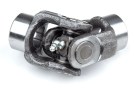
UNIVERSAL JOINT,1" X 3-3/8" X 1/2" STANDARD BORE-BRWUJ8X1/2 >
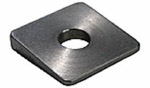
5/8" Bevel Washers

NOTCHED GRIP V-BELTS-BRW5VX1400>
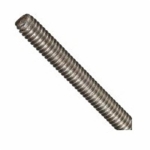
BBI 778057 All Threaded Rod, 1/2-13, 12 ft OAL, Steel, Plain
.040X1-1/2X.091X1/2X96 CONT/HINGES-MARSS0400240096 >
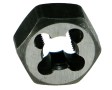
Hexagon Threading Dies are multi-edged, internally threaded tools used for cutting external threads. Hexagon dies are the same size as standard Hex Nuts.

