

Straight Miter Gears
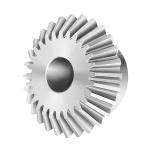

Linn 4M24-1.500 Plain Bore Miter Gear, 4 Diametral Pitch, 20 deg Pressure Angle, 24 Teeth, 6 in Dia Pitch, 1.33 in W Face, 1-1/2 to 2-5/8 in Dia Bore, Steel

Browning® 1229525 Finished Bore Straight Tooth Miter Gear With Setscrew, 10 Diametral Pitch, 20 deg Pressure Angle, 25 Teeth, 2-1/2 in Dia Pitch, 0.55 in W Face, 1 to 1-1/4 in Dia Bore, Unhardened Steel
Browning® offers a comprehensive line of off the shelf gears, including spur, miter and bevel as well as change gears. These are available in 20 deg pressure angle from 20 to 4 diametral pitch and 14.5 deg pressure angle from 48 to 3 diametral pitch. They are all designed to increase output, reduce costs and avoid the need for custom specials.

Browning® 1229491 Finished Bore Straight Tooth Miter Gear With Setscrew, 10 Diametral Pitch, 20 deg Pressure Angle, 20 Teeth, 2 in Dia Pitch, 0.44 in W Face, 5/8 to 7/8 in Dia Bore, Unhardened Steel
Browning® offers a comprehensive line of off the shelf gears, including spur, miter and bevel as well as change gears. These are available in 20 deg pressure angle from 20 to 4 diametral pitch and 14.5 deg pressure angle from 48 to 3 diametral pitch. They are all designed to increase output, reduce costs and avoid the need for custom specials.

Browning® 1229350 Minimum Plain Bore Straight Tooth Miter Gear, 6 Diametral Pitch, 20 deg Pressure Angle, 24 Teeth, 4 in Dia Pitch, 0.86 in W Face, 1-1/4 to 2 in Dia Bore, Unhardened Steel
Browning® offers a comprehensive line of off the shelf gears, including spur, miter and bevel as well as change gears. These are available in 20 deg pressure angle from 20 to 4 diametral pitch and 14.5 deg pressure angle from 48 to 3 diametral pitch. They are all designed to increase output, reduce costs and avoid the need for custom specials.

Browning® 1229285 Minimum Plain Bore Straight Tooth Miter Gear, 10 Diametral Pitch, 20 deg Pressure Angle, 25 Teeth, 2-1/2 in Dia Pitch, 0.55 in W Face, 1 to 1-1/4 in Dia Bore, Unhardened Steel
Browning® offers a comprehensive line of off the shelf gears, including spur, miter and bevel as well as change gears. These are available in 20 deg pressure angle from 20 to 4 diametral pitch and 14.5 deg pressure angle from 48 to 3 diametral pitch. They are all designed to increase output, reduce costs and avoid the need for custom specials.

Browning® 1229269 Minimum Plain Bore Straight Tooth Miter Gear, 10 Diametral Pitch, 20 deg Pressure Angle, 25 Teeth, 2-1/2 in Dia Pitch, 0.55 in W Face, 3/4 to 1-1/4 in Dia Bore, Unhardened Steel
Browning® offers a comprehensive line of off the shelf gears, including spur, miter and bevel as well as change gears. These are available in 20 deg pressure angle from 20 to 4 diametral pitch and 14.5 deg pressure angle from 48 to 3 diametral pitch. They are all designed to increase output, reduce costs and avoid the need for custom specials.

Browning® 1229251 Minimum Plain Bore Straight Tooth Miter Gear, 10 Diametral Pitch, 20 deg Pressure Angle, 20 Teeth, 2 in Dia Pitch, 0.44 in W Face, 3/4 to 7/8 in Dia Bore, Unhardened Steel
Browning® offers a comprehensive line of off the shelf gears, including spur, miter and bevel as well as change gears. These are available in 20 deg pressure angle from 20 to 4 diametral pitch and 14.5 deg pressure angle from 48 to 3 diametral pitch. They are all designed to increase output, reduce costs and avoid the need for custom specials.

Browning® 1229152 Minimum Plain Bore Straight Tooth Miter Gear, 12 Diametral Pitch, 20 deg Pressure Angle, 18 Teeth, 1-1/2 in Dia Pitch, 0.32 in W Face, 1/2 to 5/8 in Dia Bore, Unhardened Steel
Browning® offers a comprehensive line of off the shelf gears, including spur, miter and bevel as well as change gears. These are available in 20 deg pressure angle from 20 to 4 diametral pitch and 14.5 deg pressure angle from 48 to 3 diametral pitch. They are all designed to increase output, reduce costs and avoid the need for custom specials.

Browning® 1229129 Minimum Plain Bore Straight Tooth Miter Gear, 12 Diametral Pitch, 20 deg Pressure Angle, 15 Teeth, 1-1/4 in Dia Pitch, 0.27 in W Face, 3/8 to 1/2 in Dia Bore, Unhardened Steel
Browning® offers a comprehensive line of off the shelf gears, including spur, miter and bevel as well as change gears. These are available in 20 deg pressure angle from 20 to 4 diametral pitch and 14.5 deg pressure angle from 48 to 3 diametral pitch. They are all designed to increase output, reduce costs and avoid the need for custom specials.

Browning® 1229087 Minimum Plain Bore Straight Tooth Miter Gear, 16 Diametral Pitch, 20 deg Pressure Angle, 16 Teeth, 1 in Dia Pitch, 0.22 in W Face, 3/8 in Dia Bore, Unhardened Steel
Browning® offers a comprehensive line of off the shelf gears, including spur, miter and bevel as well as change gears. These are available in 20 deg pressure angle from 20 to 4 diametral pitch and 14.5 deg pressure angle from 48 to 3 diametral pitch. They are all designed to increase output, reduce costs and avoid the need for custom specials.

Browning® 1228865 Finished Bore Straight Miter Gear With Hardened Teeth, Keyway and Setscrew, 1 in Dia Bore
Bevel and miter gearing is a form of gearing in which the tooth-bearing surfaces are the faces of the gears rather than the edges. In bevel and miter gearing, the gears are cone shaped. This allows the edges of the mating gears to mesh and transmit torque. The geometry of the mesh creates a 90 deg angle. As a result, this type of gearing is suitable for applications where a change of direction is required. Other designs exist to create other angles however 90 deg serves the majority of applications. In bevel and miter gearing the input and output shaft are intersecting. It is typical for bevel and miter gear reducers to have lower reduction ratios. For example, 5:1 and lower are typical and they are different than other types of gearing. Two types of bevel and miter gearing are typical. These are straight and spiral. As the name implies, the teeth of straight bevel gears are cut straight. This means that the teeth are oriented perpendicular to the outside edge of the gear. The teeth on spiral bevel gears are cut at an angle to the outside edge of the gear. This type of gearing is said to have "helical" teeth and the angle is called the "helix" angle. Bevel and miter gearing have proven reliable for many years. The use of this type of gearing extends across many industries. Some of these include food processing, woodworking, paper and textile.

Browning® 1228832 Finished Bore Straight Miter Gear With Hardened Teeth, Keyway and Setscrew, 3/4 in Dia Bore
Bevel and miter gearing is a form of gearing in which the tooth-bearing surfaces are the faces of the gears rather than the edges. In bevel and miter gearing, the gears are cone shaped. This allows the edges of the mating gears to mesh and transmit torque. The geometry of the mesh creates a 90 deg angle. As a result, this type of gearing is suitable for applications where a change of direction is required. Other designs exist to create other angles however 90 deg serves the majority of applications. In bevel and miter gearing the input and output shaft are intersecting. It is typical for bevel and miter gear reducers to have lower reduction ratios. For example, 5:1 and lower are typical and they are different than other types of gearing. Two types of bevel and miter gearing are typical. These are straight and spiral. As the name implies, the teeth of straight bevel gears are cut straight. This means that the teeth are oriented perpendicular to the outside edge of the gear. The teeth on spiral bevel gears are cut at an angle to the outside edge of the gear. This type of gearing is said to have "helical" teeth and the angle is called the "helix" angle. Bevel and miter gearing have proven reliable for many years. The use of this type of gearing extends across many industries. Some of these include food processing, woodworking, paper and textile.

Browning® 1228824 Finished Bore Straight Tooth Miter Gear With Setscrew, 10 Diametral Pitch, 20 deg Pressure Angle, 20 Teeth, 2 in Dia Pitch, 0.44 in W Face, 5/8 in Dia Bore, Hardened Steel
Browning® offers a comprehensive line of off the shelf gears, including spur, miter and bevel as well as change gears. These are available in 20 deg pressure angle from 20 to 4 diametral pitch and 14.5 deg pressure angle from 48 to 3 diametral pitch. They are all designed to increase output, reduce costs and avoid the need for custom specials.

Browning® 1228790 Finished Bore Straight Miter Gear With Hardened Teeth, Keyway and Setscrew, 5/8 in Dia Bore
Bevel and miter gearing is a form of gearing in which the tooth-bearing surfaces are the faces of the gears rather than the edges. In bevel and miter gearing, the gears are cone shaped. This allows the edges of the mating gears to mesh and transmit torque. The geometry of the mesh creates a 90 deg angle. As a result, this type of gearing is suitable for applications where a change of direction is required. Other designs exist to create other angles however 90 deg serves the majority of applications. In bevel and miter gearing the input and output shaft are intersecting. It is typical for bevel and miter gear reducers to have lower reduction ratios. For example, 5:1 and lower are typical and they are different than other types of gearing. Two types of bevel and miter gearing are typical. These are straight and spiral. As the name implies, the teeth of straight bevel gears are cut straight. This means that the teeth are oriented perpendicular to the outside edge of the gear. The teeth on spiral bevel gears are cut at an angle to the outside edge of the gear. This type of gearing is said to have "helical" teeth and the angle is called the "helix" angle. Bevel and miter gearing have proven reliable for many years. The use of this type of gearing extends across many industries. Some of these include food processing, woodworking, paper and textile.
Recently Viewed
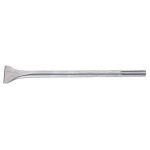
Milwaukee® 48-62-4085 Scaling Chisel, 18 mm SDS-Max Shank, 2 in W Blade, 12 in OAL
Milwaukee® chisels are made from high grade, forged steel, providing up to 20% longer life. Designed to clean concrete, scale, rust and cut troughs and some asphalt. This chisel is specifically designed for SDS Max rotary hammers and should be used in hammer only mode.

RIDGID® 99215 Seal, For Use With: Model RB-214/RB-215 Core Drilling Machines Type 1 Motor
RIDGID® 99215 Seal, For Use With: Model RB-214/RB-215 Core Drilling Machines Type 1 Motor

Greenlee® Slug-Splitter SC® 36490 Round Self-Centering Threaded Replacement Knockout Punch, 1.218 in Dia Cutting, Steel
Greenlee® Slug-Splitter SC® 36490 Round Self-Centering Threaded Replacement Knockout Punch, 1.218 in Dia Cutting, Steel

