

Straight Miter Gears

Browning® offers a comprehensive line of off the shelf gears, including spur, miter and bevel as well as change gears. These are available in 20 deg pressure angle from 20 to 4 diametral pitch and 14.5 deg pressure angle from 48 to 3 diametral pitch. They are all designed to increase output, reduce costs and avoid the need for custom specials.

Browning® offers a comprehensive line of off the shelf gears, including spur, miter and bevel as well as change gears. These are available in 20 deg pressure angle from 20 to 4 diametral pitch and 14.5 deg pressure angle from 48 to 3 diametral pitch. They are all designed to increase output, reduce costs and avoid the need for custom specials.

Browning® offers a comprehensive line of off the shelf gears, including spur, miter and bevel as well as change gears. These are available in 20 deg pressure angle from 20 to 4 diametral pitch and 14.5 deg pressure angle from 48 to 3 diametral pitch. They are all designed to increase output, reduce costs and avoid the need for custom specials.

Bevel and miter gearing is a form of gearing in which the tooth-bearing surfaces are the faces of the gears rather than the edges. In bevel and miter gearing, the gears are cone shaped. This allows the edges of the mating gears to mesh and transmit torque. The geometry of the mesh creates a 90 deg angle. As a result, this type of gearing is suitable for applications where a change of direction is required. Other designs exist to create other angles however 90 deg serves the majority of applications. In bevel and miter gearing the input and output shaft are intersecting. It is typical for bevel and miter gear reducers to have lower reduction ratios. For example, 5:1 and lower are typical and they are different than other types of gearing. Two types of bevel and miter gearing are typical. These are straight and spiral. As the name implies, the teeth of straight bevel gears are cut straight. This means that the teeth are oriented perpendicular to the outside edge of the gear. The teeth on spiral bevel gears are cut at an angle to the outside edge of the gear. This type of gearing is said to have "helical" teeth and the angle is called the "helix" angle. Bevel and miter gearing have proven reliable for many years. The use of this type of gearing extends across many industries. Some of these include food processing, woodworking, paper and textile.

Browning® offers a comprehensive line of off the shelf gears, including spur, miter and bevel as well as change gears. These are available in 20 deg pressure angle from 20 to 4 diametral pitch and 14.5 deg pressure angle from 48 to 3 diametral pitch. They are all designed to increase output, reduce costs and avoid the need for custom specials.

Browning® offers a comprehensive line of off the shelf gears, including spur, miter and bevel as well as change gears. These are available in 20 deg pressure angle from 20 to 4 diametral pitch and 14.5 deg pressure angle from 48 to 3 diametral pitch. They are all designed to increase output, reduce costs and avoid the need for custom specials.

Bevel and miter gearing is a form of gearing in which the tooth-bearing surfaces are the faces of the gears rather than the edges. In bevel and miter gearing, the gears are cone shaped. This allows the edges of the mating gears to mesh and transmit torque. The geometry of the mesh creates a 90 deg angle. As a result, this type of gearing is suitable for applications where a change of direction is required. Other designs exist to create other angles however 90 deg serves the majority of applications. In bevel and miter gearing the input and output shaft are intersecting. It is typical for bevel and miter gear reducers to have lower reduction ratios. For example, 5:1 and lower are typical and they are different than other types of gearing. Two types of bevel and miter gearing are typical. These are straight and spiral. As the name implies, the teeth of straight bevel gears are cut straight. This means that the teeth are oriented perpendicular to the outside edge of the gear. The teeth on spiral bevel gears are cut at an angle to the outside edge of the gear. This type of gearing is said to have "helical" teeth and the angle is called the "helix" angle. Bevel and miter gearing have proven reliable for many years. The use of this type of gearing extends across many industries. Some of these include food processing, woodworking, paper and textile.

Browning® offers a comprehensive line of off the shelf gears, including spur, miter and bevel as well as change gears. These are available in 20 deg pressure angle from 20 to 4 diametral pitch and 14.5 deg pressure angle from 48 to 3 diametral pitch. They are all designed to increase output, reduce costs and avoid the need for custom specials.

Browning® offers a comprehensive line of off the shelf gears, including spur, miter and bevel as well as change gears. These are available in 20 deg pressure angle from 20 to 4 diametral pitch and 14.5 deg pressure angle from 48 to 3 diametral pitch. They are all designed to increase output, reduce costs and avoid the need for custom specials.

Browning® offers a comprehensive line of off the shelf gears, including spur, miter and bevel as well as change gears. These are available in 20 deg pressure angle from 20 to 4 diametral pitch and 14.5 deg pressure angle from 48 to 3 diametral pitch. They are all designed to increase output, reduce costs and avoid the need for custom specials.

Browning® offers a comprehensive line of off the shelf gears, including spur, miter and bevel as well as change gears. These are available in 20 deg pressure angle from 20 to 4 diametral pitch and 14.5 deg pressure angle from 48 to 3 diametral pitch. They are all designed to increase output, reduce costs and avoid the need for custom specials.

Browning® offers a comprehensive line of off the shelf gears, including spur, miter and bevel as well as change gears. These are available in 20 deg pressure angle from 20 to 4 diametral pitch and 14.5 deg pressure angle from 48 to 3 diametral pitch. They are all designed to increase output, reduce costs and avoid the need for custom specials.

Bevel and miter gearing is a form of gearing in which the tooth-bearing surfaces are the faces of the gears rather than the edges. In bevel and miter gearing, the gears are cone shaped. This allows the edges of the mating gears to mesh and transmit torque. The geometry of the mesh creates a 90 deg angle. As a result, this type of gearing is suitable for applications where a change of direction is required. Other designs exist to create other angles however 90 deg serves the majority of applications. In bevel and miter gearing the input and output shaft are intersecting. It is typical for bevel and miter gear reducers to have lower reduction ratios. For example, 5:1 and lower are typical and they are different than other types of gearing. Two types of bevel and miter gearing are typical. These are straight and spiral. As the name implies, the teeth of straight bevel gears are cut straight. This means that the teeth are oriented perpendicular to the outside edge of the gear. The teeth on spiral bevel gears are cut at an angle to the outside edge of the gear. This type of gearing is said to have "helical" teeth and the angle is called the "helix" angle. Bevel and miter gearing have proven reliable for many years. The use of this type of gearing extends across many industries. Some of these include food processing, woodworking, paper and textile.
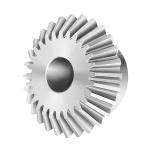

Linn 4M24-1.500 Plain Bore Miter Gear, 4 Diametral Pitch, 20 deg Pressure Angle, 24 Teeth, 6 in Dia Pitch, 1.33 in W Face, 1-1/2 to 2-5/8 in Dia Bore, Steel
Linn 4M24-1.500 Plain Bore Miter Gear, 4 Diametral Pitch, 20 deg Pressure Angle, 24 Teeth, 6 in Dia Pitch, 1.33 in W Face, 1-1/2 to 2-5/8 in Dia Bore, Steel
Recently Viewed
Browning® offers a comprehensive line of off the shelf gears, including spur, miter and bevel as well as change gears. These are available in 20 deg pressure angle from 20 to 4 diametral pitch and 14.5 deg pressure angle from 48 to 3 diametral pitch. They are all designed to increase output, reduce costs and avoid the need for custom specials.
32-OZ PLASTIC BOTTLES ONLY-CON932B>
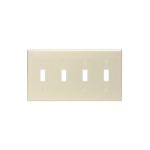
Leviton® 86012 Standard Size Wall Plate, 4 Gangs, 8.18 in W x 4.5 in H, Thermoset, Ivory
Familiar and functional, Leviton® traditional wallplates are designed for use with traditional Leviton® devices. They represent styles and form factors that have stood the test of time. Their clean lines work in virtually any location, whether in new or retrofit construction and they install quickly and easily. Leviton® offers traditional wallplates in a vast array of colors and configurations.

Sealmaster® gold mounted ball bearings feature a wide outer race insert bearing with land riding metallic retainer. The black oxide treated bearing steel insert features an exclusive lock pin and dimple system providing a direct path for lubrication into the bearing, and prevents outer ring rotation within the housing. Shaft lock is achieved by either setscrew or Skwezloc® concentric locking collar. The felt seal with flinger provide a good balance between contaminant entry, GoldPlex® HP grease loss and friction. Depending on your preference, these bearings are available in both inch and metric shaft sizes with a wide variety of cast iron, stamped steel or rubber mount housings, sealing, and lubrication options or industry specific solutions.

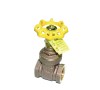
NIBCO T-113-3/8 102T Non-Rising Stem Gate Valve, 3/8 in Nominal, NPT End Style, 125 lb, Bronze Body, Handwheel Actuator, Domestic
The Apollo™ Model 102T (30 Series) Gate Valve provides a cost effective Made in the USA alternative to globally sourced multi-turn valves. These valves are cast, machined, assembled, and tested in South Carolina. The Apollo™ gate valve is ideal for use in a wide variety of plumbing and heating applications including building service piping systems.
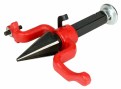
RIDGID® 42365 341 Reamer, For Use With: Model 535 Pipe and Bolt Threading Machine
RIDGID® 42365 341 Reamer, For Use With: Model 535 Pipe and Bolt Threading Machine

