Timing Pulleys

Browning® Gearbelt® 1055235 Type 2 Synchronous Timing Pulley With Flange, 5/8 to 1-3/8 in Bore, 3.312 in OD, 28 Grooves, 3.342 in Dia Pitch, 1 in W Face
Synchronous belt drives help reduce the problems of slippage, belt stretch, lubrication and metal to metal contact. They provide superior performance because power is transmitted by positive engagement of belt teeth rather than by friction, as in conventional belt drives.

Browning® Gearbelt® 1055250 Type 2 Synchronous Timing Pulley With Flange, 5/8 to 1-5/8 in Bore, 3.79 in OD, 32 Grooves, 3.82 in Dia Pitch, 1 in W Face
Synchronous belt drives help reduce the problems of slippage, belt stretch, lubrication and metal to metal contact. They provide superior performance because power is transmitted by positive engagement of belt teeth rather than by friction, as in conventional belt drives.

Browning® Gearbelt® 1055268 Type 2 Synchronous Timing Pulley With Flange, 5/8 to 2-5/16 in Bore, 4.267 in OD, 36 Grooves, 4.297 in Dia Pitch, 1 in W Face
Synchronous belt drives help reduce the problems of slippage, belt stretch, lubrication and metal to metal contact. They provide superior performance because power is transmitted by positive engagement of belt teeth rather than by friction, as in conventional belt drives.

Browning® Gearbelt® 1055276 Type 2 Synchronous Timing Pulley With Flange, 5/8 to 2-3/8 in Bore, 4.745 in OD, 40 Grooves, 4.775 in Dia Pitch, 1 in W Face
Synchronous belt drives help reduce the problems of slippage, belt stretch, lubrication and metal to metal contact. They provide superior performance because power is transmitted by positive engagement of belt teeth rather than by friction, as in conventional belt drives.

Browning® Gearbelt® 1055284 Type 2 Synchronous Timing Pulley With Flange, 1/2 to 7/8 in Bore, 2.119 in OD, 18 Grooves, 2.149 in Dia Pitch, 1-1/4 in W Face
Synchronous belt drives help reduce the problems of slippage, belt stretch, lubrication and metal to metal contact. They provide superior performance because power is transmitted by positive engagement of belt teeth rather than by friction, as in conventional belt drives.

Browning® Gearbelt® 1055300 Type 2 Synchronous Timing Pulley With Flange, 1/2 to 7/8 in Bore, 2.357 in OD, 20 Grooves, 2.387 in Dia Pitch, 1-1/4 in W Face
Synchronous belt drives help reduce the problems of slippage, belt stretch, lubrication and metal to metal contact. They provide superior performance because power is transmitted by positive engagement of belt teeth rather than by friction, as in conventional belt drives.

Browning® Gearbelt® 1055318 Type 2 Synchronous Timing Pulley With Flange, 5/8 to 1-1/4 in Bore, 2.477 in OD, 21 Grooves, 2.507 in Dia Pitch, 1-1/4 in W Face
Synchronous belt drives help reduce the problems of slippage, belt stretch, lubrication and metal to metal contact. They provide superior performance because power is transmitted by positive engagement of belt teeth rather than by friction, as in conventional belt drives.

Browning® Gearbelt® 1055326 Type 2 Synchronous Timing Pulley With Flange, 5/8 to 1-1/4 in Bore, 2.596 in OD, 22 Grooves, 2.626 in Dia Pitch, 1-1/4 in W Face
Synchronous belt drives help reduce the problems of slippage, belt stretch, lubrication and metal to metal contact. They provide superior performance because power is transmitted by positive engagement of belt teeth rather than by friction, as in conventional belt drives.

Browning® Gearbelt® 1055334 Type 2 Synchronous Timing Pulley With Flange, 5/8 to 1-3/8 in Bore, 2.835 in OD, 24 Grooves, 2.865 in Dia Pitch, 1-1/4 in W Face
Synchronous belt drives help reduce the problems of slippage, belt stretch, lubrication and metal to metal contact. They provide superior performance because power is transmitted by positive engagement of belt teeth rather than by friction, as in conventional belt drives.

Browning® Gearbelt® 1055359 Type 2 Synchronous Timing Pulley With Flange, 5/8 to 1-3/4 in Bore, 3.312 in OD, 28 Grooves, 3.342 in Dia Pitch, 1-1/4 in W Face
Synchronous belt drives help reduce the problems of slippage, belt stretch, lubrication and metal to metal contact. They provide superior performance because power is transmitted by positive engagement of belt teeth rather than by friction, as in conventional belt drives.

Browning® Gearbelt® 1055375 Type 2 Synchronous Timing Pulley With Flange, 5/8 to 2 in Bore, 3.79 in OD, 32 Grooves, 3.82 in Dia Pitch, 1-1/4 in W Face
Synchronous belt drives help reduce the problems of slippage, belt stretch, lubrication and metal to metal contact. They provide superior performance because power is transmitted by positive engagement of belt teeth rather than by friction, as in conventional belt drives.

Browning® Gearbelt® 1055383 Type 2 Synchronous Timing Pulley With Flange, 5/8 to 2-5/16 in Bore, 4.267 in OD, 36 Grooves, 4.297 in Dia Pitch, 1-1/4 in W Face
Synchronous belt drives help reduce the problems of slippage, belt stretch, lubrication and metal to metal contact. They provide superior performance because power is transmitted by positive engagement of belt teeth rather than by friction, as in conventional belt drives.

Browning® Gearbelt® 1055391 Type 2 Synchronous Timing Pulley With Flange, 5/8 to 2-5/16 in Bore, 4.745 in OD, 10 Grooves, 4.775 in Dia Pitch, 1-1/4 in W Face
Synchronous belt drives help reduce the problems of slippage, belt stretch, lubrication and metal to metal contact. They provide superior performance because power is transmitted by positive engagement of belt teeth rather than by friction, as in conventional belt drives.

Browning® Gearbelt® 1055409 Type 2 Synchronous Timing Pulley With Flange, 5/8 to 7/8 in Bore, 2.174 in OD, 14 Grooves, 2.228 in Dia Pitch, 1-1/4 in W Face
Synchronous belt drives help reduce the problems of slippage, belt stretch, lubrication and metal to metal contact. They provide superior performance because power is transmitted by positive engagement of belt teeth rather than by friction, as in conventional belt drives.

Browning® Gearbelt® 1055417 Type 2 Synchronous Timing Pulley With Flange, 5/8 to 1-1/8 in Bore, 2.492 in OD, 16 Grooves, 2.546 in Dia Pitch, 1-1/4 in W Face
Synchronous belt drives help reduce the problems of slippage, belt stretch, lubrication and metal to metal contact. They provide superior performance because power is transmitted by positive engagement of belt teeth rather than by friction, as in conventional belt drives.

Browning® Gearbelt® 1055433 Type 2 Synchronous Timing Pulley With Flange, 5/8 to 1-3/8 in Bore, 2.811 in OD, 18 Grooves, 2.865 in Dia Pitch, 1-1/4 in W Face
Synchronous belt drives help reduce the problems of slippage, belt stretch, lubrication and metal to metal contact. They provide superior performance because power is transmitted by positive engagement of belt teeth rather than by friction, as in conventional belt drives.

Browning® Gearbelt® 1055458 Type 2 Synchronous Timing Pulley With Flange, 5/8 to 1-5/8 in Bore, 3.129 in OD, 20 Grooves, 3.183 in Dia Pitch, 1-1/4 in W Face
Synchronous belt drives help reduce the problems of slippage, belt stretch, lubrication and metal to metal contact. They provide superior performance because power is transmitted by positive engagement of belt teeth rather than by friction, as in conventional belt drives.

Browning® Gearbelt® 1055466 Type 2 Synchronous Timing Pulley With Flange, 3/4 to 1-11/16 in Bore, 3.288 in OD, 21 Grooves, 3.342 in Dia Pitch, 1-1/4 in W Face
Synchronous belt drives help reduce the problems of slippage, belt stretch, lubrication and metal to metal contact. They provide superior performance because power is transmitted by positive engagement of belt teeth rather than by friction, as in conventional belt drives.

Browning® Gearbelt® 1055474 Type 2 Synchronous Timing Pulley With Flange, 3/4 to 1-3/4 in Bore, 3.447 in OD, 22 Grooves, 3.501 in Dia Pitch, 1-1/4 in W Face
Synchronous belt drives help reduce the problems of slippage, belt stretch, lubrication and metal to metal contact. They provide superior performance because power is transmitted by positive engagement of belt teeth rather than by friction, as in conventional belt drives.

Browning® Gearbelt® 1055482 Type 2 Synchronous Timing Pulley With Flange, 3/4 to 1-7/8 in Bore, 3.766 in OD, 24 Grooves, 3.82 in Dia Pitch, 1-1/4 in W Face
Synchronous belt drives help reduce the problems of slippage, belt stretch, lubrication and metal to metal contact. They provide superior performance because power is transmitted by positive engagement of belt teeth rather than by friction, as in conventional belt drives.

Browning® Gearbelt® 1055490 Type 2 Synchronous Timing Pulley With Flange, 3/4 to 2-1/4 in Bore, 4.084 in OD, 26 Grooves, 4.138 in Dia Pitch, 1-1/4 in W Face
Synchronous belt drives help reduce the problems of slippage, belt stretch, lubrication and metal to metal contact. They provide superior performance because power is transmitted by positive engagement of belt teeth rather than by friction, as in conventional belt drives.

Browning® Gearbelt® 1055524 Type 2 Synchronous Timing Pulley With Flange, 3/4 to 7/8 in Bore, 2.174 in OD, 14 Grooves, 2.228 in Dia Pitch, 1-3/4 in W Face
Synchronous belt drives help reduce the problems of slippage, belt stretch, lubrication and metal to metal contact. They provide superior performance because power is transmitted by positive engagement of belt teeth rather than by friction, as in conventional belt drives.

Browning® Gearbelt® 1055532 Type 2 Synchronous Timing Pulley With Flange, 3/4 to 1-1/8 in Bore, 2.492 in OD, 16 Grooves, 2.546 in Dia Pitch, 1-3/4 in W Face
Synchronous belt drives help reduce the problems of slippage, belt stretch, lubrication and metal to metal contact. They provide superior performance because power is transmitted by positive engagement of belt teeth rather than by friction, as in conventional belt drives.

Browning® Gearbelt® 1055557 Type 2 Synchronous Timing Pulley With Flange, 3/4 to 1-3/8 in Bore, 2.811 in OD, 18 Grooves, 2.865 in Dia Pitch, 1-3/4 in W Face
Synchronous belt drives help reduce the problems of slippage, belt stretch, lubrication and metal to metal contact. They provide superior performance because power is transmitted by positive engagement of belt teeth rather than by friction, as in conventional belt drives.
Recently Viewed
United Abrasives-SAIT 81220 DA-F Handy Utility Coated Handy Roll, 50 yd L x 2 in W, 120 Grit, Fine Grade, Aluminum Oxide Abrasive, Cloth Backing
28-MM-ID SEALED BALL BEARING WITH SNAP RING-GUL63/282RSNR >
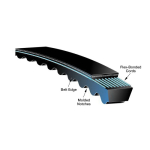

Gates CX-136 Tri-Power® Industrial V-Belts - CX Section, 7/8 in Top Width, 1 Strand, 141.0000 in Nominal Outside Length, Cogged
Most traditional v-belts struggle with small spaces and cause frequent interruptions, leading to costly downtime. Reduce these common drive issues with Tri-Power, your tried-and-true classical section replacement V-belt. The Tri-Power bandless V-belt is specifically designed to tackle the challenges associated with small sheave diameters on existing drives. Whether powering compressors, pumps, or other critical equipment, this belt ensures that your machinery runs efficiently and reliably. The advantage of this bandless V-belt lies in its ability to provide a like-for-like replacement without the need for full-system replacements. Its advanced design not only suits small sheaves but also enhances power transmission and reduces maintenance needs. Choose Gates Tri-Power V-belts for a dependable high-quality solution that keeps your existing drives running longer without interruptions.

Browning® 3693959 B5V® Type 3 Multiple Sheave, 1/2 to 1-15/16 in Split Taper Bore, 6.28 in OD, 2 Grooves, 6.1 in (5V)/5.8 in (A)/6.3 in (B) Dia Pitch, 1-23/32 in W Face
Browning® offers an extensive multi groove sheave offering. This includes Browning® SPLIT TAPER® and QD® bushing designs. This means maximum economy and versatility for your application. Truly the right drive every time! Our exclusive B5V® sheaves have a patented design that offers 5 V hp in the economy of a B section sheave. B5V® sheaves serve 90% of all applications from 10 to 150 hp. This can reduce cost up to 40% over traditional designs.
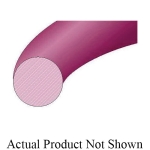
Dichtomatik N70347 O-Ring, 347 Dash Number, 4.225 in ID x 4.645 in OD, Nitrile Rubber, 70 Shore A Durometer, Import
O-rings are closed circular rings of circular cross-section. They are made through vulcanization from form tools as a complete ring. The sealing function of the O-ring is achieved by the deformation of the cross-section when installed and compressed in its housing. The O-ring can be compressed either radially or axially in its installation housing. In operating conditions the pressure exerted by the media reinforces the sealing function, as under pressure the elastomer material functions as a non-compressible fluid.