

Timing Pulleys

Browning® Gearbelt® 1055235 Type 2 Synchronous Timing Pulley With Flange, 5/8 to 1-3/8 in Bore, 3.312 in OD, 28 Grooves, 3.342 in Dia Pitch, 1 in W Face
Synchronous belt drives help reduce the problems of slippage, belt stretch, lubrication and metal to metal contact. They provide superior performance because power is transmitted by positive engagement of belt teeth rather than by friction, as in conventional belt drives.

Browning® Gearbelt® 1055250 Type 2 Synchronous Timing Pulley With Flange, 5/8 to 1-5/8 in Bore, 3.79 in OD, 32 Grooves, 3.82 in Dia Pitch, 1 in W Face
Synchronous belt drives help reduce the problems of slippage, belt stretch, lubrication and metal to metal contact. They provide superior performance because power is transmitted by positive engagement of belt teeth rather than by friction, as in conventional belt drives.

Browning® Gearbelt® 1055268 Type 2 Synchronous Timing Pulley With Flange, 5/8 to 2-5/16 in Bore, 4.267 in OD, 36 Grooves, 4.297 in Dia Pitch, 1 in W Face
Synchronous belt drives help reduce the problems of slippage, belt stretch, lubrication and metal to metal contact. They provide superior performance because power is transmitted by positive engagement of belt teeth rather than by friction, as in conventional belt drives.

Browning® Gearbelt® 1055276 Type 2 Synchronous Timing Pulley With Flange, 5/8 to 2-3/8 in Bore, 4.745 in OD, 40 Grooves, 4.775 in Dia Pitch, 1 in W Face
Synchronous belt drives help reduce the problems of slippage, belt stretch, lubrication and metal to metal contact. They provide superior performance because power is transmitted by positive engagement of belt teeth rather than by friction, as in conventional belt drives.

Browning® Gearbelt® 1055284 Type 2 Synchronous Timing Pulley With Flange, 1/2 to 7/8 in Bore, 2.119 in OD, 18 Grooves, 2.149 in Dia Pitch, 1-1/4 in W Face
Synchronous belt drives help reduce the problems of slippage, belt stretch, lubrication and metal to metal contact. They provide superior performance because power is transmitted by positive engagement of belt teeth rather than by friction, as in conventional belt drives.

Browning® Gearbelt® 1055300 Type 2 Synchronous Timing Pulley With Flange, 1/2 to 7/8 in Bore, 2.357 in OD, 20 Grooves, 2.387 in Dia Pitch, 1-1/4 in W Face
Synchronous belt drives help reduce the problems of slippage, belt stretch, lubrication and metal to metal contact. They provide superior performance because power is transmitted by positive engagement of belt teeth rather than by friction, as in conventional belt drives.

Browning® Gearbelt® 1055318 Type 2 Synchronous Timing Pulley With Flange, 5/8 to 1-1/4 in Bore, 2.477 in OD, 21 Grooves, 2.507 in Dia Pitch, 1-1/4 in W Face
Synchronous belt drives help reduce the problems of slippage, belt stretch, lubrication and metal to metal contact. They provide superior performance because power is transmitted by positive engagement of belt teeth rather than by friction, as in conventional belt drives.

Browning® Gearbelt® 1055326 Type 2 Synchronous Timing Pulley With Flange, 5/8 to 1-1/4 in Bore, 2.596 in OD, 22 Grooves, 2.626 in Dia Pitch, 1-1/4 in W Face
Synchronous belt drives help reduce the problems of slippage, belt stretch, lubrication and metal to metal contact. They provide superior performance because power is transmitted by positive engagement of belt teeth rather than by friction, as in conventional belt drives.

Browning® Gearbelt® 1055334 Type 2 Synchronous Timing Pulley With Flange, 5/8 to 1-3/8 in Bore, 2.835 in OD, 24 Grooves, 2.865 in Dia Pitch, 1-1/4 in W Face
Synchronous belt drives help reduce the problems of slippage, belt stretch, lubrication and metal to metal contact. They provide superior performance because power is transmitted by positive engagement of belt teeth rather than by friction, as in conventional belt drives.

Browning® Gearbelt® 1055359 Type 2 Synchronous Timing Pulley With Flange, 5/8 to 1-3/4 in Bore, 3.312 in OD, 28 Grooves, 3.342 in Dia Pitch, 1-1/4 in W Face
Synchronous belt drives help reduce the problems of slippage, belt stretch, lubrication and metal to metal contact. They provide superior performance because power is transmitted by positive engagement of belt teeth rather than by friction, as in conventional belt drives.

Browning® Gearbelt® 1055375 Type 2 Synchronous Timing Pulley With Flange, 5/8 to 2 in Bore, 3.79 in OD, 32 Grooves, 3.82 in Dia Pitch, 1-1/4 in W Face
Synchronous belt drives help reduce the problems of slippage, belt stretch, lubrication and metal to metal contact. They provide superior performance because power is transmitted by positive engagement of belt teeth rather than by friction, as in conventional belt drives.

Browning® Gearbelt® 1055383 Type 2 Synchronous Timing Pulley With Flange, 5/8 to 2-5/16 in Bore, 4.267 in OD, 36 Grooves, 4.297 in Dia Pitch, 1-1/4 in W Face
Synchronous belt drives help reduce the problems of slippage, belt stretch, lubrication and metal to metal contact. They provide superior performance because power is transmitted by positive engagement of belt teeth rather than by friction, as in conventional belt drives.

Browning® Gearbelt® 1055391 Type 2 Synchronous Timing Pulley With Flange, 5/8 to 2-5/16 in Bore, 4.745 in OD, 10 Grooves, 4.775 in Dia Pitch, 1-1/4 in W Face
Synchronous belt drives help reduce the problems of slippage, belt stretch, lubrication and metal to metal contact. They provide superior performance because power is transmitted by positive engagement of belt teeth rather than by friction, as in conventional belt drives.

Browning® Gearbelt® 1055409 Type 2 Synchronous Timing Pulley With Flange, 5/8 to 7/8 in Bore, 2.174 in OD, 14 Grooves, 2.228 in Dia Pitch, 1-1/4 in W Face
Synchronous belt drives help reduce the problems of slippage, belt stretch, lubrication and metal to metal contact. They provide superior performance because power is transmitted by positive engagement of belt teeth rather than by friction, as in conventional belt drives.

Browning® Gearbelt® 1055417 Type 2 Synchronous Timing Pulley With Flange, 5/8 to 1-1/8 in Bore, 2.492 in OD, 16 Grooves, 2.546 in Dia Pitch, 1-1/4 in W Face
Synchronous belt drives help reduce the problems of slippage, belt stretch, lubrication and metal to metal contact. They provide superior performance because power is transmitted by positive engagement of belt teeth rather than by friction, as in conventional belt drives.

Browning® Gearbelt® 1055433 Type 2 Synchronous Timing Pulley With Flange, 5/8 to 1-3/8 in Bore, 2.811 in OD, 18 Grooves, 2.865 in Dia Pitch, 1-1/4 in W Face
Synchronous belt drives help reduce the problems of slippage, belt stretch, lubrication and metal to metal contact. They provide superior performance because power is transmitted by positive engagement of belt teeth rather than by friction, as in conventional belt drives.

Browning® Gearbelt® 1055458 Type 2 Synchronous Timing Pulley With Flange, 5/8 to 1-5/8 in Bore, 3.129 in OD, 20 Grooves, 3.183 in Dia Pitch, 1-1/4 in W Face
Synchronous belt drives help reduce the problems of slippage, belt stretch, lubrication and metal to metal contact. They provide superior performance because power is transmitted by positive engagement of belt teeth rather than by friction, as in conventional belt drives.

Browning® Gearbelt® 1055466 Type 2 Synchronous Timing Pulley With Flange, 3/4 to 1-11/16 in Bore, 3.288 in OD, 21 Grooves, 3.342 in Dia Pitch, 1-1/4 in W Face
Synchronous belt drives help reduce the problems of slippage, belt stretch, lubrication and metal to metal contact. They provide superior performance because power is transmitted by positive engagement of belt teeth rather than by friction, as in conventional belt drives.

Browning® Gearbelt® 1055474 Type 2 Synchronous Timing Pulley With Flange, 3/4 to 1-3/4 in Bore, 3.447 in OD, 22 Grooves, 3.501 in Dia Pitch, 1-1/4 in W Face
Synchronous belt drives help reduce the problems of slippage, belt stretch, lubrication and metal to metal contact. They provide superior performance because power is transmitted by positive engagement of belt teeth rather than by friction, as in conventional belt drives.

Browning® Gearbelt® 1055482 Type 2 Synchronous Timing Pulley With Flange, 3/4 to 1-7/8 in Bore, 3.766 in OD, 24 Grooves, 3.82 in Dia Pitch, 1-1/4 in W Face
Synchronous belt drives help reduce the problems of slippage, belt stretch, lubrication and metal to metal contact. They provide superior performance because power is transmitted by positive engagement of belt teeth rather than by friction, as in conventional belt drives.

Browning® Gearbelt® 1055490 Type 2 Synchronous Timing Pulley With Flange, 3/4 to 2-1/4 in Bore, 4.084 in OD, 26 Grooves, 4.138 in Dia Pitch, 1-1/4 in W Face
Synchronous belt drives help reduce the problems of slippage, belt stretch, lubrication and metal to metal contact. They provide superior performance because power is transmitted by positive engagement of belt teeth rather than by friction, as in conventional belt drives.

Browning® Gearbelt® 1055524 Type 2 Synchronous Timing Pulley With Flange, 3/4 to 7/8 in Bore, 2.174 in OD, 14 Grooves, 2.228 in Dia Pitch, 1-3/4 in W Face
Synchronous belt drives help reduce the problems of slippage, belt stretch, lubrication and metal to metal contact. They provide superior performance because power is transmitted by positive engagement of belt teeth rather than by friction, as in conventional belt drives.

Browning® Gearbelt® 1055532 Type 2 Synchronous Timing Pulley With Flange, 3/4 to 1-1/8 in Bore, 2.492 in OD, 16 Grooves, 2.546 in Dia Pitch, 1-3/4 in W Face
Synchronous belt drives help reduce the problems of slippage, belt stretch, lubrication and metal to metal contact. They provide superior performance because power is transmitted by positive engagement of belt teeth rather than by friction, as in conventional belt drives.

Browning® Gearbelt® 1055557 Type 2 Synchronous Timing Pulley With Flange, 3/4 to 1-3/8 in Bore, 2.811 in OD, 18 Grooves, 2.865 in Dia Pitch, 1-3/4 in W Face
Synchronous belt drives help reduce the problems of slippage, belt stretch, lubrication and metal to metal contact. They provide superior performance because power is transmitted by positive engagement of belt teeth rather than by friction, as in conventional belt drives.
Recently Viewed
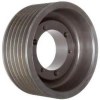
6-GRV 5-V-BELT QUICK DISCONNECT E-BUSH SHEAVES

FYH® ALF206 20FP9 ALF Cylindrical Flange Mount Ball Bearing Unit, 1-1/4 in Dia Bore, 3-9/16 in L Bolt Center-to-Center, 15/32 in Dia Bolt Circle, 2-Bolt Flange Flange Mount, 4-7/16 in OAL/Dia
FYH® ALF206 20FP9 ALF Cylindrical Flange Mount Ball Bearing Unit, 1-1/4 in Dia Bore, 3-9/16 in L Bolt Center-to-Center, 15/32 in Dia Bolt Circle, 2-Bolt Flange Flange Mount, 4-7/16 in OAL/Dia
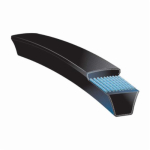
Gates® Power Transmission Super HC® 5V2650 Banded Heavy Duty V-Belt, 5V Section, 5/8 in W Top, 265 in L Outside, 35/64 in THK, Chloroprene
Combines the strength of a wrapped belt construction with the economies of a narrow section V-belt. Transmits more power in a given space and allows more compact drive design than classical section V-belts. In short, it offers you more power and considerably reduces the space needed. This significantly cuts the overall drive cost. Super HC™ V-belts also have exclusive Gates construction features for longer life on your drives.
3-BOLT TIRING BEARING FLANGE (EA)-IBI72MSTRZP >
330-MM X 18-MM X 203.2-MM GRINDING WHEEL-MGW66250610479 >
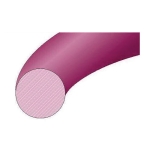
Dichtomatik 75182217 Extruded O-Ring Cord, 1/4 in Dia, 70 Shore A Durometer, Nitrile, Black, Domestic
O-rings are endless, ring shaped sealing elements with a circular cross-section that are manufactured from elastomer materials or PTFE. The designation of an O-ring is derived from the dimensions of its inner diameter and cord width in millimeters, along with the name of the material and its Shore A hardness.

