

Timing Pulleys

Browning® Gearbelt® 1056688 Type 16 Synchronous Timing Pulley With Flange, 3/8 to 1-1/2 in Split Taper Bore, 5.7 in OD, 48 Grooves, 5.73 in Dia Pitch, 1-1/4 in W Face
Synchronous belt drives help reduce the problems of slippage, belt stretch, lubrication and metal to metal contact. They provide superior performance because power is transmitted by positive engagement of belt teeth rather than by friction, as in conventional belt drives.

Browning® Gearbelt® 1056803 Type 4 Synchronous Timing Pulley With Flange, 3/8 to 1 in Split Taper Bore, 2.174 in OD, 14 Grooves, 2.228 in Dia Pitch, 1-1/4 in W Face
Synchronous belt drives help reduce the problems of slippage, belt stretch, lubrication and metal to metal contact. They provide superior performance because power is transmitted by positive engagement of belt teeth rather than by friction, as in conventional belt drives.

Browning® Gearbelt® 1056829 Type 4 Synchronous Timing Pulley With Flange, 3/8 to 1-1/2 in Split Taper Bore, 2.811 in OD, 18 Grooves, 2.865 in Dia Pitch, 1-1/4 in W Face
Synchronous belt drives help reduce the problems of slippage, belt stretch, lubrication and metal to metal contact. They provide superior performance because power is transmitted by positive engagement of belt teeth rather than by friction, as in conventional belt drives.

Browning® Gearbelt® 1056837 Type 4 Synchronous Timing Pulley With Flange, 3/8 to 1-1/2 in Split Taper Bore, 3.129 in OD, 20 Grooves, 3.183 in Dia Pitch, 1-1/4 in W Face
Synchronous belt drives help reduce the problems of slippage, belt stretch, lubrication and metal to metal contact. They provide superior performance because power is transmitted by positive engagement of belt teeth rather than by friction, as in conventional belt drives.

Browning® Gearbelt® 1056845 Type 16 Synchronous Timing Pulley With Flange, 3/8 to 1-1/2 in Split Taper Bore, 3.447 in OD, 22 Grooves, 3.501 in Dia Pitch, 1-1/4 in W Face
Synchronous belt drives help reduce the problems of slippage, belt stretch, lubrication and metal to metal contact. They provide superior performance because power is transmitted by positive engagement of belt teeth rather than by friction, as in conventional belt drives.

Browning® Gearbelt® 1056852 Type 6 Synchronous Timing Pulley With Flange, 1/2 to 1-3/4 in Split Taper Bore, 3.447 in OD, 22 Grooves, 3.501 in Dia Pitch, 1-1/4 in W Face
Synchronous belt drives help reduce the problems of slippage, belt stretch, lubrication and metal to metal contact. They provide superior performance because power is transmitted by positive engagement of belt teeth rather than by friction, as in conventional belt drives.

Browning® Gearbelt® 1056860 Type 16 Synchronous Timing Pulley With Flange, 3/8 to 1-1/2 in Split Taper Bore, 3.766 in OD, 24 Grooves, 3.82 in Dia Pitch, 1-1/4 in W Face
Synchronous belt drives help reduce the problems of slippage, belt stretch, lubrication and metal to metal contact. They provide superior performance because power is transmitted by positive engagement of belt teeth rather than by friction, as in conventional belt drives.

Browning® Gearbelt® 1056878 Type 6 Synchronous Timing Pulley With Flange, 1/2 to 1-3/4 in Split Taper Bore, 3.766 in OD, 24 Grooves, 3.82 in Dia Pitch, 1-1/4 in W Face
Synchronous belt drives help reduce the problems of slippage, belt stretch, lubrication and metal to metal contact. They provide superior performance because power is transmitted by positive engagement of belt teeth rather than by friction, as in conventional belt drives.

Browning® Gearbelt® 1056886 Type 16 Synchronous Timing Pulley With Flange, 3/8 to 1-1/2 in Split Taper Bore, 4.084 in OD, 26 Grooves, 4.138 in Dia Pitch, 1-1/4 in W Face
Synchronous belt drives help reduce the problems of slippage, belt stretch, lubrication and metal to metal contact. They provide superior performance because power is transmitted by positive engagement of belt teeth rather than by friction, as in conventional belt drives.

Browning® Gearbelt® 1056928 Type 16 Synchronous Timing Pulley With Flange, 3/8 to 1-1/2 in Split Taper Bore, 4.721 in OD, 30 Grooves, 4.775 in Dia Pitch, 1-1/4 in W Face
Synchronous belt drives help reduce the problems of slippage, belt stretch, lubrication and metal to metal contact. They provide superior performance because power is transmitted by positive engagement of belt teeth rather than by friction, as in conventional belt drives.

Browning® Gearbelt® 1056977 Type 7 Synchronous Timing Pulley With Flange, 3/4 to 2-11/16 in Split Taper Bore, 6.949 in OD, 44 Grooves, 7.003 in Dia Pitch, 1-1/4 in W Face
Synchronous belt drives help reduce the problems of slippage, belt stretch, lubrication and metal to metal contact. They provide superior performance because power is transmitted by positive engagement of belt teeth rather than by friction, as in conventional belt drives.

Browning® Gearbelt® 1056985 Type 13 Synchronous Flanged Pulley, 3/4 to 2-11/16 in Split Taper Bore, 7.585 in OD, 48 Grooves, 7.639 in Dia Pitch, 1-1/4 in W Face
Browning® Gearbelt® 1056985 Type 13 Synchronous Flanged Pulley, 3/4 to 2-11/16 in Split Taper Bore, 7.585 in OD, 48 Grooves, 7.639 in Dia Pitch, 1-1/4 in W Face

Browning® Gearbelt® 1057009 Type 13 Synchronous Timing Pulley, 3/4 to 2-11/16 in Split Taper Bore, 11.405 in OD, 72 Grooves, 11.459 in Dia Pitch, 1-1/4 in W Face
Browning® Gearbelt® 1057009 Type 13 Synchronous Timing Pulley, 3/4 to 2-11/16 in Split Taper Bore, 11.405 in OD, 72 Grooves, 11.459 in Dia Pitch, 1-1/4 in W Face

Browning® Gearbelt® 1057058 Type 4 Synchronous Timing Pulley With Flange, 3/8 to 1 in Split Taper Bore, 2.174 in OD, 14 Grooves, 2.228 in Dia Pitch, 1-3/4 in W Face
Synchronous belt drives help reduce the problems of slippage, belt stretch, lubrication and metal to metal contact. They provide superior performance because power is transmitted by positive engagement of belt teeth rather than by friction, as in conventional belt drives.

Browning® Gearbelt® 1057116 Type 16 Synchronous Timing Pulley With Flange, 3/8 to 1-1/2 in Split Taper Bore, 3.766 in OD, 24 Grooves, 3.82 in Dia Pitch, 1-3/4 in W Face
Synchronous belt drives help reduce the problems of slippage, belt stretch, lubrication and metal to metal contact. They provide superior performance because power is transmitted by positive engagement of belt teeth rather than by friction, as in conventional belt drives.

Browning® Gearbelt® 1057124 Type 9 Synchronous Timing Pulley With Flange, 1/2 to 1-3/4 in Split Taper Bore, 3.766 in OD, 24 Grooves, 3.82 in Dia Pitch, 1-3/4 in W Face
Synchronous belt drives help reduce the problems of slippage, belt stretch, lubrication and metal to metal contact. They provide superior performance because power is transmitted by positive engagement of belt teeth rather than by friction, as in conventional belt drives.

Browning® Gearbelt® 1057132 Type 16 Synchronous Timing Pulley With Flange, 3/8 to 1-1/2 in Split Taper Bore, 4.084 in OD, 26 Grooves, 4.138 in Dia Pitch, 1-3/4 in W Face
Synchronous belt drives help reduce the problems of slippage, belt stretch, lubrication and metal to metal contact. They provide superior performance because power is transmitted by positive engagement of belt teeth rather than by friction, as in conventional belt drives.

Browning® Gearbelt® 1057157 Type 16 Synchronous Timing Pulley With Flange, 3/8 to 1-1/2 in Split Taper Bore, 4.402 in OD, 28 Grooves, 4.456 in Dia Pitch, 1-3/4 in W Face
Synchronous belt drives help reduce the problems of slippage, belt stretch, lubrication and metal to metal contact. They provide superior performance because power is transmitted by positive engagement of belt teeth rather than by friction, as in conventional belt drives.

Browning® Gearbelt® 1057207 Type 9 Synchronous Timing Pulley With Flange, 3/4 to 2-11/16 in Split Taper Bore, 5.676 in OD, 36 Grooves, 5.73 in Dia Pitch, 1-3/4 in W Face
Synchronous belt drives help reduce the problems of slippage, belt stretch, lubrication and metal to metal contact. They provide superior performance because power is transmitted by positive engagement of belt teeth rather than by friction, as in conventional belt drives.

Browning® Gearbelt® 1057231 Type 9 Synchronous Timing Pulley With Flange, 3/4 to 2-11/16 in Split Taper Bore, 7.585 in OD, 48 Grooves, 7.639 in Dia Pitch, 1-3/4 in W Face
Synchronous belt drives help reduce the problems of slippage, belt stretch, lubrication and metal to metal contact. They provide superior performance because power is transmitted by positive engagement of belt teeth rather than by friction, as in conventional belt drives.

Browning® Gearbelt® 1057264 Type 13 Synchronous Timing Pulley, 3/4 to 2-11/16 in Split Taper Bore, 13.315 in OD, 84 Grooves, 13.369 in Dia Pitch, 1-3/4 in W Face
Browning® Gearbelt® 1057264 Type 13 Synchronous Timing Pulley, 3/4 to 2-11/16 in Split Taper Bore, 13.315 in OD, 84 Grooves, 13.369 in Dia Pitch, 1-3/4 in W Face

Browning® Gearbelt® 1057314 Type 6 Synchronous Timing Pulley With Flange, 3/4 to 1-3/4 in Split Taper Bore, 3.766 in OD, 24 Grooves, 3.82 in Dia Pitch, 2-9/32 in W Face
Synchronous belt drives help reduce the problems of slippage, belt stretch, lubrication and metal to metal contact. They provide superior performance because power is transmitted by positive engagement of belt teeth rather than by friction, as in conventional belt drives.

Browning® Gearbelt® 1057348 Type 6 Synchronous Flanged Pulley, 3/4 to 1-3/4 in Split Taper Bore, 4.721 in OD, 30 Grooves, 4.775 in Dia Pitch, 2.281 in W Face
Browning® Gearbelt® 1057348 Type 6 Synchronous Flanged Pulley, 3/4 to 1-3/4 in Split Taper Bore, 4.721 in OD, 30 Grooves, 4.775 in Dia Pitch, 2.281 in W Face

Browning® Gearbelt® 1057355 Type 11 Synchronous Flanged Pulley, 3/4 to 2-11/16 in Split Taper Bore, 5.039 in OD, 32 Grooves, 5.093 in Dia Pitch, 2.281 in W Face
Browning® Gearbelt® 1057355 Type 11 Synchronous Flanged Pulley, 3/4 to 2-11/16 in Split Taper Bore, 5.039 in OD, 32 Grooves, 5.093 in Dia Pitch, 2.281 in W Face
Recently Viewed


Speakman® SE-4000 Portable Eyewash, Pull-Down Operation, ANSI/ISEA Z358.1
The Speakman® GravityFlo 21 gallon portable eyewash is designed to provide the ultimate solution to locations in need of an eyewash that have no access to a potable water source. The GravityFlo portable eyewash station features a 21 gallon tank, providing continuous flow for the ANSI/ISEA Z358.1 required 15 minutes. With the capability to be cart or wall mounted, this gravity operated eyewash can be placed practically anywhere within a worksite. Activated by pull-down spray arms the SE-4000 instantly delivers relieving streams, allowing hands-free operation. The SE-4000 also features a side port for connection of an optional drench hose.
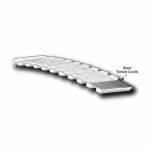
Gates® Power Transmission Synchro-Power® T5-940-16 Metric T Synchronous Belt, 16 mm W, 940 mm OAL, 5 mm Pitch, 188 Teeth, Polyurethane
Endless urethane construction provides higher strength as compared to welded urethane belts, making them well suited for use in power transmission and high performance positioning applications.
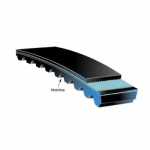
Gates® Power Transmission 5230V734 Banded Multi-Speed V-Belt, 3-1/4 in W Top, 30 deg Groove, 75.3 in L Outside, Rubber
Multi-speed belts are made banded or bandless construction featuring high-modulus, fiber-loaded stock that offers transverse rigidity and flexibility at the same time. This results in higher load carrying capacity and long belt life.
Gates® Power Transmission 1228V255 Bandless Multi-Speed V-Belt, 3/4 in W Top, 28 deg Groove, 26.1 in L Outside, Rubber
Multi-speed belts are made banded or bandless construction featuring high-modulus, fiber-loaded stock that offers transverse rigidity and flexibility at the same time. This results in higher load carrying capacity and long belt life.

