

Regal Rexnord

Browning® Classical Gripbelt® 3693793 B5V® Arm Type 2 Single Groove Sheave, Split Taper Bore, 1/2 to 2-7/16 in Dia Bore, 12.68 in OD, 12.2 in (A)/12.7 in (B)/12-1/2 in (BV) Dia Pitch, 1 in W Face
Browning® Classical Gripbelt® 3693793 B5V® Arm Type 2 Single Groove Sheave, Split Taper Bore, 1/2 to 2-7/16 in Dia Bore, 12.68 in OD, 12.2 in (A)/12.7 in (B)/12-1/2 in (BV) Dia Pitch, 1 in W Face

Browning® Classical Gripbelt® 3695178 B5V® Single Groove Sheave, Split Taper Bore, 1/2 to 1-3/4 in Dia Bore, 4.48 in OD, 4 in (A)/4-1/2 in (B)/4.3 in (BV) Dia Pitch, 1 in W Face
Browning® Classical Gripbelt® 3695178 B5V® Single Groove Sheave, Split Taper Bore, 1/2 to 1-3/4 in Dia Bore, 4.48 in OD, 4 in (A)/4-1/2 in (B)/4.3 in (BV) Dia Pitch, 1 in W Face

Browning® Classical Gripbelt® 3695210 B5V® Single Groove Sheave, Split Taper Bore, 1/2 to 1-3/4 in Dia Bore, 4.68 in OD, 4.2 in (A)/4.7 in (B)/4-1/2 in (BV) Dia Pitch, 1 in W Face
Browning® Classical Gripbelt® 3695210 B5V® Single Groove Sheave, Split Taper Bore, 1/2 to 1-3/4 in Dia Bore, 4.68 in OD, 4.2 in (A)/4.7 in (B)/4-1/2 in (BV) Dia Pitch, 1 in W Face

Browning® Gearbelt® 1054428 Type 1 Synchronous Timing Pulley With Flange, 3/8 in Finished Bore, 1.522 in OD, 13 Grooves, 1.552 in Dia Pitch, 3/4 in W Face
Synchronous belt drives help reduce the problems of slippage, belt stretch, lubrication and metal to metal contact. They provide superior performance because power is transmitted by positive engagement of belt teeth rather than by friction, as in conventional belt drives.

Browning® Gearbelt® 1054444 Type 1 Synchronous Timing Pulley With Flange, 3/8 in Finished Bore, 1.641 in OD, 14 Grooves, 1.671 in Dia Pitch, 3/4 in W Face
Synchronous belt drives help reduce the problems of slippage, belt stretch, lubrication and metal to metal contact. They provide superior performance because power is transmitted by positive engagement of belt teeth rather than by friction, as in conventional belt drives.

Browning® Gearbelt® 1054451 Type 1 Synchronous Timing Pulley With Flange, 1/2 in Finished Bore, 1.641 in OD, 14 Grooves, 1.671 in Dia Pitch, 3/4 in W Face
Synchronous belt drives help reduce the problems of slippage, belt stretch, lubrication and metal to metal contact. They provide superior performance because power is transmitted by positive engagement of belt teeth rather than by friction, as in conventional belt drives.

Browning® Gearbelt® 1054493 Type 1 Synchronous Timing Pulley With Flange, 1/2 in Finished Bore, 1.88 in OD, 16 Grooves, 1.91 in Dia Pitch, 3/4 in W Face
Synchronous belt drives help reduce the problems of slippage, belt stretch, lubrication and metal to metal contact. They provide superior performance because power is transmitted by positive engagement of belt teeth rather than by friction, as in conventional belt drives.

Browning® Gearbelt® 1054501 Type 1 Synchronous Timing Pulley With Flange, 5/8 in Finished Bore, 1.88 in OD, 16 Grooves, 1.91 in Dia Pitch, 3/4 in W Face
Synchronous belt drives help reduce the problems of slippage, belt stretch, lubrication and metal to metal contact. They provide superior performance because power is transmitted by positive engagement of belt teeth rather than by friction, as in conventional belt drives.

Browning® Gearbelt® 1054550 Type 1 Synchronous Timing Pulley With Flange, 3/8 in Finished Bore, 1.402 in OD, 12 Grooves, 1.432 in Dia Pitch, 1 in W Face
Synchronous belt drives help reduce the problems of slippage, belt stretch, lubrication and metal to metal contact. They provide superior performance because power is transmitted by positive engagement of belt teeth rather than by friction, as in conventional belt drives.

Browning® Gearbelt® 1054568 Type 1 Synchronous Timing Pulley With Flange, 1/2 in Finished Bore, 1.402 in OD, 12 Grooves, 1.432 in Dia Pitch, 1 in W Face
Synchronous belt drives help reduce the problems of slippage, belt stretch, lubrication and metal to metal contact. They provide superior performance because power is transmitted by positive engagement of belt teeth rather than by friction, as in conventional belt drives.

Browning® Gearbelt® 1054600 Type 1 Synchronous Timing Pulley With Flange, 1/2 in Finished Bore, 1.641 in OD, 14 Grooves, 1.671 in Dia Pitch, 1 in W Face
Synchronous belt drives help reduce the problems of slippage, belt stretch, lubrication and metal to metal contact. They provide superior performance because power is transmitted by positive engagement of belt teeth rather than by friction, as in conventional belt drives.

Browning® Gearbelt® 1054634 Type 1 Synchronous Timing Pulley With Flange, 3/4 in Finished Bore, 1.76 in OD, 15 Grooves, 1.79 in Dia Pitch, 1 in W Face
Synchronous belt drives help reduce the problems of slippage, belt stretch, lubrication and metal to metal contact. They provide superior performance because power is transmitted by positive engagement of belt teeth rather than by friction, as in conventional belt drives.

Browning® Gearbelt® 1054659 Type 1 Synchronous Timing Pulley With Flange, 5/8 in Finished Bore, 1.88 in OD, 16 Grooves, 1.91 in Dia Pitch, 1 in W Face
Synchronous belt drives help reduce the problems of slippage, belt stretch, lubrication and metal to metal contact. They provide superior performance because power is transmitted by positive engagement of belt teeth rather than by friction, as in conventional belt drives.

Browning® Gearbelt® 1054667 Type 1 Synchronous Timing Pulley With Flange, 3/4 in Finished Bore, 1.88 in OD, 16 Grooves, 1.91 in Dia Pitch, 1 in W Face
Synchronous belt drives help reduce the problems of slippage, belt stretch, lubrication and metal to metal contact. They provide superior performance because power is transmitted by positive engagement of belt teeth rather than by friction, as in conventional belt drives.

Browning® Gearbelt® 1054782 Type 1 Synchronous Timing Pulley With Flange, 5/8 in Finished Bore, 1.88 in OD, 16 Grooves, 1.91 in Dia Pitch, 1-1/4 in W Face
Synchronous belt drives help reduce the problems of slippage, belt stretch, lubrication and metal to metal contact. They provide superior performance because power is transmitted by positive engagement of belt teeth rather than by friction, as in conventional belt drives.

Browning® Gearbelt® 1054865 Type 2 Synchronous Timing Pulley With Flange, 1/4 to 1/4 in Bore, 0.871 in OD, 14 Grooves, 0.891 in Dia Pitch, 9/16 in W Face
Synchronous belt drives help reduce the problems of slippage, belt stretch, lubrication and metal to metal contact. They provide superior performance because power is transmitted by positive engagement of belt teeth rather than by friction, as in conventional belt drives.

Browning® Gearbelt® 1054873 Type 2 Synchronous Timing Pulley With Flange, 1/4 to 5/16 in Bore, 0.935 in OD, 15 Grooves, 0.955 in Dia Pitch, 9/16 in W Face
Synchronous belt drives help reduce the problems of slippage, belt stretch, lubrication and metal to metal contact. They provide superior performance because power is transmitted by positive engagement of belt teeth rather than by friction, as in conventional belt drives.

Browning® Gearbelt® 1054899 Type 2 Synchronous Timing Pulley With Flange, 1/4 to 1/2 in Bore, 1.126 in OD, 18 Grooves, 1.146 in Dia Pitch, 9/16 in W Face
Synchronous belt drives help reduce the problems of slippage, belt stretch, lubrication and metal to metal contact. They provide superior performance because power is transmitted by positive engagement of belt teeth rather than by friction, as in conventional belt drives.

Browning® Gearbelt® 1054907 Type 2 Synchronous Timing Pulley With Flange, 1/4 to 9/16 in Bore, 1.253 in OD, 20 Grooves, 1.273 in Dia Pitch, 9/16 in W Face
Synchronous belt drives help reduce the problems of slippage, belt stretch, lubrication and metal to metal contact. They provide superior performance because power is transmitted by positive engagement of belt teeth rather than by friction, as in conventional belt drives.

Browning® Gearbelt® 1054915 Type 2 Synchronous Timing Pulley With Flange, 1/4 to 9/16 in Bore, 1.317 in OD, 21 Grooves, 1.337 in Dia Pitch, 9/16 in W Face
Synchronous belt drives help reduce the problems of slippage, belt stretch, lubrication and metal to metal contact. They provide superior performance because power is transmitted by positive engagement of belt teeth rather than by friction, as in conventional belt drives.

Browning® Gearbelt® 1054923 Type 2 Synchronous Timing Pulley With Flange, 1/4 to 5/8 in Bore, 1.381 in OD, 22 Grooves, 1.401 in Dia Pitch, 9/16 in W Face
Synchronous belt drives help reduce the problems of slippage, belt stretch, lubrication and metal to metal contact. They provide superior performance because power is transmitted by positive engagement of belt teeth rather than by friction, as in conventional belt drives.

Browning® Gearbelt® 1054931 Type 2 Synchronous Timing Pulley With Flange, 1/4 to 11/16 in Bore, 1.508 in OD, 24 Grooves, 1.528 in Dia Pitch, 9/16 in W Face
Synchronous belt drives help reduce the problems of slippage, belt stretch, lubrication and metal to metal contact. They provide superior performance because power is transmitted by positive engagement of belt teeth rather than by friction, as in conventional belt drives.

Browning® Gearbelt® 1054949 Type 2 Synchronous Timing Pulley With Flange, 1/4 to 13/16 in Bore, 1.763 in OD, 28 Grooves, 1.783 in Dia Pitch, 9/16 in W Face
Synchronous belt drives help reduce the problems of slippage, belt stretch, lubrication and metal to metal contact. They provide superior performance because power is transmitted by positive engagement of belt teeth rather than by friction, as in conventional belt drives.

Browning® Gearbelt® 1054956 Type 2 Synchronous Timing Pulley With Flange, 1/4 to 15/16 in Bore, 1.89 in OD, 30 Grooves, 1.91 in Dia Pitch, 9/16 in W Face
Synchronous belt drives help reduce the problems of slippage, belt stretch, lubrication and metal to metal contact. They provide superior performance because power is transmitted by positive engagement of belt teeth rather than by friction, as in conventional belt drives.
Recently Viewed

1-1/4" -FEMALE PIPE THREADX3/4" FEMALE PIPE THREAD BLACK REDUCER-FIT11/4X3/4BR >
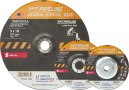

The United Abrasives/SAIT A24R Pipeline wheel is designed and manufactured to perform both cutting and light grinding on ferrous metals (steel, cast iron, etc.) eliminating the need for two separate wheels. Proudly manufactured in the USA.
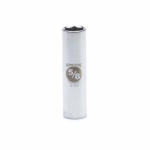
Armstrong® 12-214 Deep Length Socket, 1/2 in Square Drive, 7/16 in, 6 Points

