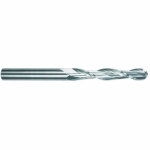
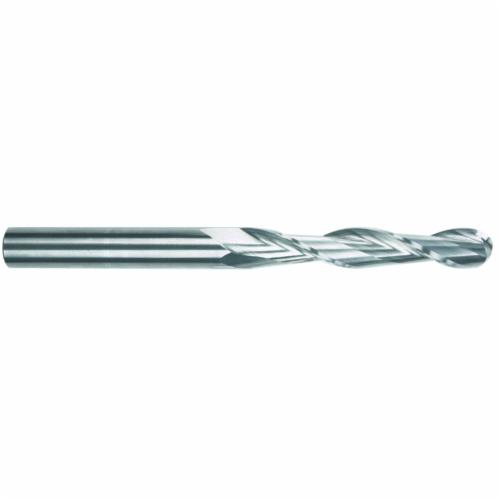
MORSE® 90520 5952T Ball Nose Center Cutting Extra Long Length Single End End Mill, 1/8 in Dia Cutter, 1 in Length of Cut, 2 Flutes, 1/8 in Dia Shank, 3 in OAL, TiALN Coated

0 Ratings
$30.99
In Stock
SKU: MCT90520
noimage_new

MORSE® 90520 5952T Ball Nose Center Cutting Extra Long Length Single End End Mill, 1/8 in Dia Cutter, 1 in Length of Cut, 2 Flutes, 1/8 in Dia Shank, 3 in OAL, TiALN Coated

In Stock
HCI of Jackson: 2
HCI of Dyersburg: 0
HCI of Humboldt: 0
HCI of Union City: 0
HCI of Gallatin: 0
My Wishlist
Compare
Main specs
  • Brand
    MORSE®
  • UPC
    686125905200
  • Manufacturer Part Number
    90520
  • Country
    USA
Specification
  • Finish
    TiALN Coated
  • Material
    Solid Micrograin Carbide
  • Type
    Ball Nose Center Cutting Extra Long Length Single End
  • Helix Angle
    30 deg
  • Series
    5952T
  • Cutter Diameter
    1/8 in
  • Shank Diameter
    1/8 in
  • Number of Flutes
    2
  • Cutting Direction
    Right Hand
  • Shank Type
    Plain/Round
  • Length of Cut
    1 in
  • Overall Length
    3 in
Features
  • 2-flute end mills provide increased chip capacity for higher feed rates
  • Recommended for easy-to-machine materials including low alloy steels, non-ferrous materials and cast iron
  • Ball nose end mills are designed for milling die cavities, fillets, round bottom holes and radius bottom slots
  • Center cutting end allows for plunge cutting like a drill into solid materia
Additional Information
  • UNSPSC
    23242511
  • Package Description
    1/PK
  • Standards/Approvals
    ISO 9001:2008
Attachments
Reviews

There are yet no reviews for this product.

Recently Viewed

MORSE® 90520 5952T Ball Nose Center Cutting Extra Long Length Single End End Mill, 1/8 in Dia Cutter, 1 in Length of Cut, 2 Flutes, 1/8 in Dia Shank, 3 in OAL, TiALN Coated

Bevel and miter gearing is a form of gearing in which the tooth-bearing surfaces are the faces of the gears rather than the edges. In bevel and miter gearing, the gears are cone shaped. This allows the edges of the mating gears to mesh and transmit torque. The geometry of the mesh creates a 90 deg angle. As a result, this type of gearing is suitable for applications where a change of direction is required. Other designs exist to create other angles however 90 deg serves the majority of applications. In bevel and miter gearing the input and output shaft are intersecting. It is typical for bevel and miter gear reducers to have lower reduction ratios. For example, 5:1 and lower are typical and they are different than other types of gearing. Two types of bevel and miter gearing are typical. These are straight and spiral. As the name implies, the teeth of straight bevel gears are cut straight. This means that the teeth are oriented perpendicular to the outside edge of the gear. The teeth on spiral bevel gears are cut at an angle to the outside edge of the gear. This type of gearing is said to have "helical" teeth and the angle is called the "helix" angle. Bevel and miter gearing have proven reliable for many years. The use of this type of gearing extends across many industries. Some of these include food processing, woodworking, paper and textile.

Browning® offers a comprehensive line of off the shelf gears, including spur, miter and bevel as well as change gears. These are available in 20 deg pressure angle from 20 to 4 diametral pitch and 14.5 deg pressure angle from 48 to 3 diametral pitch. They are all designed to increase output, reduce costs and avoid the need for custom specials.

The new Littelfuse® class H and R blocks offer many advantages over previous generations that are noted in the features and benefits section. Class H and class R fuse blocks are dimensionally the same, but class R blocks incorporate A rejection feature, which only allows class R fuses to be inserted.

OXYGEN-ACETYLENE MIXER, (4-UM-1) MEDIUM DUTY, VICTOR COMPATIBLE-FOR87795 >

Bevel and miter gearing is a form of gearing in which the tooth-bearing surfaces are the faces of the gears rather than the edges. In bevel and miter gearing, the gears are cone shaped. This allows the edges of the mating gears to mesh and transmit torque. The geometry of the mesh creates a 90 deg angle. As a result, this type of gearing is suitable for applications where a change of direction is required. Other designs exist to create other angles however 90 deg serves the majority of applications. In bevel and miter gearing the input and output shaft are intersecting. It is typical for bevel and miter gear reducers to have lower reduction ratios. For example, 5:1 and lower are typical and they are different than other types of gearing. Two types of bevel and miter gearing are typical. These are straight and spiral. As the name implies, the teeth of straight bevel gears are cut straight. This means that the teeth are oriented perpendicular to the outside edge of the gear. The teeth on spiral bevel gears are cut at an angle to the outside edge of the gear. This type of gearing is said to have "helical" teeth and the angle is called the "helix" angle. Bevel and miter gearing have proven reliable for many years. The use of this type of gearing extends across many industries. Some of these include food processing, woodworking, paper and textile.

If you need any additional information, prices, availability, etc. please contact us at 1-800-290-9908 or e-mail us at

Footer Menu