

Timing Pulleys

Browning® Gearbelt® 1054873 Type 2 Synchronous Timing Pulley With Flange, 1/4 to 5/16 in Bore, 0.935 in OD, 15 Grooves, 0.955 in Dia Pitch, 9/16 in W Face
Synchronous belt drives help reduce the problems of slippage, belt stretch, lubrication and metal to metal contact. They provide superior performance because power is transmitted by positive engagement of belt teeth rather than by friction, as in conventional belt drives.

Browning® Gearbelt® 1054865 Type 2 Synchronous Timing Pulley With Flange, 1/4 to 1/4 in Bore, 0.871 in OD, 14 Grooves, 0.891 in Dia Pitch, 9/16 in W Face
Synchronous belt drives help reduce the problems of slippage, belt stretch, lubrication and metal to metal contact. They provide superior performance because power is transmitted by positive engagement of belt teeth rather than by friction, as in conventional belt drives.

Browning® Gearbelt® 1054782 Type 1 Synchronous Timing Pulley With Flange, 5/8 in Finished Bore, 1.88 in OD, 16 Grooves, 1.91 in Dia Pitch, 1-1/4 in W Face
Synchronous belt drives help reduce the problems of slippage, belt stretch, lubrication and metal to metal contact. They provide superior performance because power is transmitted by positive engagement of belt teeth rather than by friction, as in conventional belt drives.

Browning® Gearbelt® 1054667 Type 1 Synchronous Timing Pulley With Flange, 3/4 in Finished Bore, 1.88 in OD, 16 Grooves, 1.91 in Dia Pitch, 1 in W Face
Synchronous belt drives help reduce the problems of slippage, belt stretch, lubrication and metal to metal contact. They provide superior performance because power is transmitted by positive engagement of belt teeth rather than by friction, as in conventional belt drives.

Browning® Gearbelt® 1054659 Type 1 Synchronous Timing Pulley With Flange, 5/8 in Finished Bore, 1.88 in OD, 16 Grooves, 1.91 in Dia Pitch, 1 in W Face
Synchronous belt drives help reduce the problems of slippage, belt stretch, lubrication and metal to metal contact. They provide superior performance because power is transmitted by positive engagement of belt teeth rather than by friction, as in conventional belt drives.

Browning® Gearbelt® 1054634 Type 1 Synchronous Timing Pulley With Flange, 3/4 in Finished Bore, 1.76 in OD, 15 Grooves, 1.79 in Dia Pitch, 1 in W Face
Synchronous belt drives help reduce the problems of slippage, belt stretch, lubrication and metal to metal contact. They provide superior performance because power is transmitted by positive engagement of belt teeth rather than by friction, as in conventional belt drives.

Browning® Gearbelt® 1054600 Type 1 Synchronous Timing Pulley With Flange, 1/2 in Finished Bore, 1.641 in OD, 14 Grooves, 1.671 in Dia Pitch, 1 in W Face
Synchronous belt drives help reduce the problems of slippage, belt stretch, lubrication and metal to metal contact. They provide superior performance because power is transmitted by positive engagement of belt teeth rather than by friction, as in conventional belt drives.

Browning® Gearbelt® 1054568 Type 1 Synchronous Timing Pulley With Flange, 1/2 in Finished Bore, 1.402 in OD, 12 Grooves, 1.432 in Dia Pitch, 1 in W Face
Synchronous belt drives help reduce the problems of slippage, belt stretch, lubrication and metal to metal contact. They provide superior performance because power is transmitted by positive engagement of belt teeth rather than by friction, as in conventional belt drives.

Browning® Gearbelt® 1054550 Type 1 Synchronous Timing Pulley With Flange, 3/8 in Finished Bore, 1.402 in OD, 12 Grooves, 1.432 in Dia Pitch, 1 in W Face
Synchronous belt drives help reduce the problems of slippage, belt stretch, lubrication and metal to metal contact. They provide superior performance because power is transmitted by positive engagement of belt teeth rather than by friction, as in conventional belt drives.

Browning® Gearbelt® 1054501 Type 1 Synchronous Timing Pulley With Flange, 5/8 in Finished Bore, 1.88 in OD, 16 Grooves, 1.91 in Dia Pitch, 3/4 in W Face
Synchronous belt drives help reduce the problems of slippage, belt stretch, lubrication and metal to metal contact. They provide superior performance because power is transmitted by positive engagement of belt teeth rather than by friction, as in conventional belt drives.

Browning® Gearbelt® 1054493 Type 1 Synchronous Timing Pulley With Flange, 1/2 in Finished Bore, 1.88 in OD, 16 Grooves, 1.91 in Dia Pitch, 3/4 in W Face
Synchronous belt drives help reduce the problems of slippage, belt stretch, lubrication and metal to metal contact. They provide superior performance because power is transmitted by positive engagement of belt teeth rather than by friction, as in conventional belt drives.

Browning® Gearbelt® 1054451 Type 1 Synchronous Timing Pulley With Flange, 1/2 in Finished Bore, 1.641 in OD, 14 Grooves, 1.671 in Dia Pitch, 3/4 in W Face
Synchronous belt drives help reduce the problems of slippage, belt stretch, lubrication and metal to metal contact. They provide superior performance because power is transmitted by positive engagement of belt teeth rather than by friction, as in conventional belt drives.

Browning® Gearbelt® 1054444 Type 1 Synchronous Timing Pulley With Flange, 3/8 in Finished Bore, 1.641 in OD, 14 Grooves, 1.671 in Dia Pitch, 3/4 in W Face
Synchronous belt drives help reduce the problems of slippage, belt stretch, lubrication and metal to metal contact. They provide superior performance because power is transmitted by positive engagement of belt teeth rather than by friction, as in conventional belt drives.

Browning® Gearbelt® 1054428 Type 1 Synchronous Timing Pulley With Flange, 3/8 in Finished Bore, 1.522 in OD, 13 Grooves, 1.552 in Dia Pitch, 3/4 in W Face
Synchronous belt drives help reduce the problems of slippage, belt stretch, lubrication and metal to metal contact. They provide superior performance because power is transmitted by positive engagement of belt teeth rather than by friction, as in conventional belt drives.

Browning® 1055011 Type 2A Synchronous Timing Pulley, 5/16 to 1 in, 3.036 in OD, 48 Grooves, 3.056 in Dia Pitch, 0.563 in W Face
Browning® 1055011 Type 2A Synchronous Timing Pulley, 5/16 to 1 in, 3.036 in OD, 48 Grooves, 3.056 in Dia Pitch, 0.563 in W Face
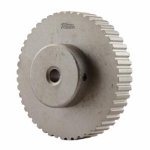

Martin timing pulleys are manufactured to extremely close specifications and are stocked in minimum plain bore, taper bushed, QD bushed styles depending on size and pitch. Synchronous sprockets are non-slip toothed drives that require no lubrication. These sprockets have a wide speed range, are very efficient and make less noise than chain drives. Teeth on the belts are molded to conform with and engage the teeth on a mating sprocket.

Synchronous belt drives help reduce the problems of slippage, belt stretch, lubrication and metal to metal contact. They provide superior performance because power is transmitted by positive engagement of belt teeth rather than by friction, as in conventional belt drives.

Synchronous belt drives help reduce the problems of slippage, belt stretch, lubrication and metal to metal contact. They provide superior performance because power is transmitted by positive engagement of belt teeth rather than by friction, as in conventional belt drives.

Synchronous belt drives help reduce the problems of slippage, belt stretch, lubrication and metal to metal contact. They provide superior performance because power is transmitted by positive engagement of belt teeth rather than by friction, as in conventional belt drives.

Synchronous belt drives help reduce the problems of slippage, belt stretch, lubrication and metal to metal contact. They provide superior performance because power is transmitted by positive engagement of belt teeth rather than by friction, as in conventional belt drives.

Synchronous belt drives help reduce the problems of slippage, belt stretch, lubrication and metal to metal contact. They provide superior performance because power is transmitted by positive engagement of belt teeth rather than by friction, as in conventional belt drives.

Synchronous belt drives help reduce the problems of slippage, belt stretch, lubrication and metal to metal contact. They provide superior performance because power is transmitted by positive engagement of belt teeth rather than by friction, as in conventional belt drives.

Synchronous belt drives help reduce the problems of slippage, belt stretch, lubrication and metal to metal contact. They provide superior performance because power is transmitted by positive engagement of belt teeth rather than by friction, as in conventional belt drives.

Synchronous belt drives help reduce the problems of slippage, belt stretch, lubrication and metal to metal contact. They provide superior performance because power is transmitted by positive engagement of belt teeth rather than by friction, as in conventional belt drives.
Recently Viewed

16-MM X 2.00X140-MM HEX HEAD CAPSCREW-MET93116140 >
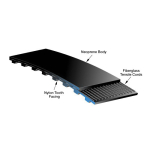
Gates® Power Transmission PowerGrip® 480H300 Heavy Timing Belt, 3 in W, 48 in OAL, 1/2 in Pitch, 96 Teeth, Neoprene
The trapezoidal tooth profile of PowerGrip™ Timing belts offers a maintenance-free and economical alternative to conventional chain drives and is well suited for use in positioning applications.
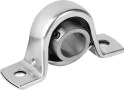
1-1-1/16" -ID 2-B PILLOW BLOCK UNIT-BRWSPB1000NE111/16 >
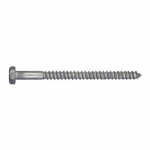
BBI 486112 Lag Screw, 1/4 in, 1-1/4 in OAL, Low Carbon Steel, Zinc Blue
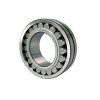
TPR-ID SPHERICAL ROLLER BEARING-GUL22317K >
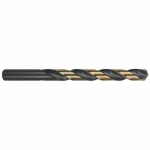
Ambore™ 12078 1384 Heavy Duty Jobber Length Drill Bit, 5/16 in Drill - Fraction, 0.3125 in Drill - Decimal Inch, 135 deg Point, HSS, Black/Gold Oxide

