

UL Class Fuse Links
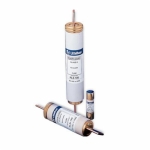
The LKN Series are fuse links designed for Littelfuse RLN series renewable fuses. Traditionally, Class H fuses were used to provide low cost protection of general purpose feeder and branch circuits where available short-circuit currents did not exceed 10,000 amperes. However, generally increased levels of available fault current and the distinct possibility that renewable fuses may be improperly renewed, rendering them unsafe, have all but eliminated the use of these fuses in new applications. In addition, escalating labour costs and increasing automation, which makes downtime very expensive, have greatly reduced or eliminated the cost savings attributed to renewable fuses.
The LKN Series are fuse links designed for Littelfuse RLN series renewable fuses. Traditionally, Class H fuses were used to provide low cost protection of general purpose feeder and branch circuits where available short-circuit currents did not exceed 10,000 amperes. However, generally increased levels of available fault current and the distinct possibility that renewable fuses may be improperly renewed, rendering them unsafe, have all but eliminated the use of these fuses in new applications. In addition, escalating labour costs and increasing automation, which makes downtime very expensive, have greatly reduced or eliminated the cost savings attributed to renewable fuses.
The LKN Series are fuse links designed for Littelfuse RLN series renewable fuses. Traditionally, Class H fuses were used to provide low cost protection of general purpose feeder and branch circuits where available short-circuit currents did not exceed 10,000 amperes. However, generally increased levels of available fault current and the distinct possibility that renewable fuses may be improperly renewed, rendering them unsafe, have all but eliminated the use of these fuses in new applications. In addition, escalating labour costs and increasing automation, which makes downtime very expensive, have greatly reduced or eliminated the cost savings attributed to renewable fuses.
The LKN Series are fuse links designed for Littelfuse RLN series renewable fuses. Traditionally, Class H fuses were used to provide low cost protection of general purpose feeder and branch circuits where available short-circuit currents did not exceed 10,000 amperes. However, generally increased levels of available fault current and the distinct possibility that renewable fuses may be improperly renewed, rendering them unsafe, have all but eliminated the use of these fuses in new applications. In addition, escalating labour costs and increasing automation, which makes downtime very expensive, have greatly reduced or eliminated the cost savings attributed to renewable fuses.
The LKN Series are fuse links designed for Littelfuse RLN series renewable fuses. Traditionally, Class H fuses were used to provide low cost protection of general purpose feeder and branch circuits where available short-circuit currents did not exceed 10,000 amperes. However, generally increased levels of available fault current and the distinct possibility that renewable fuses may be improperly renewed, rendering them unsafe, have all but eliminated the use of these fuses in new applications. In addition, escalating labour costs and increasing automation, which makes downtime very expensive, have greatly reduced or eliminated the cost savings attributed to renewable fuses.
The LKN Series are fuse links designed for Littelfuse RLN series renewable fuses. Traditionally, Class H fuses were used to provide low cost protection of general purpose feeder and branch circuits where available short-circuit currents did not exceed 10,000 amperes. However, generally increased levels of available fault current and the distinct possibility that renewable fuses may be improperly renewed, rendering them unsafe, have all but eliminated the use of these fuses in new applications. In addition, escalating labour costs and increasing automation, which makes downtime very expensive, have greatly reduced or eliminated the cost savings attributed to renewable fuses.
The LKN Series are fuse links designed for Littelfuse RLN series renewable fuses. Traditionally, Class H fuses were used to provide low cost protection of general purpose feeder and branch circuits where available short-circuit currents did not exceed 10,000 amperes. However, generally increased levels of available fault current and the distinct possibility that renewable fuses may be improperly renewed, rendering them unsafe, have all but eliminated the use of these fuses in new applications. In addition, escalating labour costs and increasing automation, which makes downtime very expensive, have greatly reduced or eliminated the cost savings attributed to renewable fuses.
The LKN Series are fuse links designed for Littelfuse RLN series renewable fuses. Traditionally, Class H fuses were used to provide low cost protection of general purpose feeder and branch circuits where available short-circuit currents did not exceed 10,000 amperes. However, generally increased levels of available fault current and the distinct possibility that renewable fuses may be improperly renewed, rendering them unsafe, have all but eliminated the use of these fuses in new applications. In addition, escalating labour costs and increasing automation, which makes downtime very expensive, have greatly reduced or eliminated the cost savings attributed to renewable fuses.
The LKN Series are fuse links designed for Littelfuse RLN series renewable fuses. Traditionally, Class H fuses were used to provide low cost protection of general purpose feeder and branch circuits where available short-circuit currents did not exceed 10,000 amperes. However, generally increased levels of available fault current and the distinct possibility that renewable fuses may be improperly renewed, rendering them unsafe, have all but eliminated the use of these fuses in new applications. In addition, escalating labour costs and increasing automation, which makes downtime very expensive, have greatly reduced or eliminated the cost savings attributed to renewable fuses.
The LKN Series are fuse links designed for Littelfuse RLN series renewable fuses. Traditionally, Class H fuses were used to provide low cost protection of general purpose feeder and branch circuits where available short-circuit currents did not exceed 10,000 amperes. However, generally increased levels of available fault current and the distinct possibility that renewable fuses may be improperly renewed, rendering them unsafe, have all but eliminated the use of these fuses in new applications. In addition, escalating labour costs and increasing automation, which makes downtime very expensive, have greatly reduced or eliminated the cost savings attributed to renewable fuses.
The LKN Series are fuse links designed for Littelfuse RLN series renewable fuses. Traditionally, Class H fuses were used to provide low cost protection of general purpose feeder and branch circuits where available short-circuit currents did not exceed 10,000 amperes. However, generally increased levels of available fault current and the distinct possibility that renewable fuses may be improperly renewed, rendering them unsafe, have all but eliminated the use of these fuses in new applications. In addition, escalating labour costs and increasing automation, which makes downtime very expensive, have greatly reduced or eliminated the cost savings attributed to renewable fuses.
The LKN Series are fuse links designed for Littelfuse RLN series renewable fuses. Traditionally, Class H fuses were used to provide low cost protection of general purpose feeder and branch circuits where available short-circuit currents did not exceed 10,000 amperes. However, generally increased levels of available fault current and the distinct possibility that renewable fuses may be improperly renewed, rendering them unsafe, have all but eliminated the use of these fuses in new applications. In addition, escalating labour costs and increasing automation, which makes downtime very expensive, have greatly reduced or eliminated the cost savings attributed to renewable fuses.
The LKN Series are fuse links designed for Littelfuse RLN series renewable fuses. Traditionally, Class H fuses were used to provide low cost protection of general purpose feeder and branch circuits where available short-circuit currents did not exceed 10,000 amperes. However, generally increased levels of available fault current and the distinct possibility that renewable fuses may be improperly renewed, rendering them unsafe, have all but eliminated the use of these fuses in new applications. In addition, escalating labour costs and increasing automation, which makes downtime very expensive, have greatly reduced or eliminated the cost savings attributed to renewable fuses.
Recently Viewed
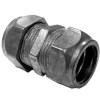
2-1/2" EMT COMPRESSION COUPLING - APLTC617 >
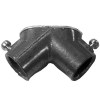
3/4" EMT CONDUIT PULL ELBOWS-APLTHL750>
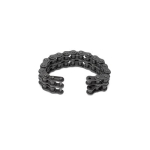
Dodge® provides a broad line of chain couplings. A compact design utilizing hardened tooth sprockets and ANSI standard double width roller chain allows the Dodge® chain coupling to provide excellent torque and bore capacities. Chain assemblies are connected with a link pin, allowing for easy installation or removal. Interchangeable with industry-standard dimensions, Dodge® chain couplings offer a simple, widely accepted and economical way to connect two shafts.

#10 S-FLEX COUPLING SLEEVES-TBW10H>
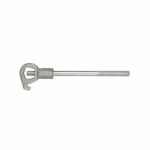
Kuriyama SWHA Heavy-Duty Wrench, 1-1/2 to 6 in L
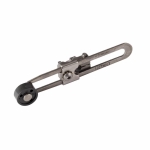
EATON E50KL201 Adjustable Roller Heavy Duty Plug-In Limit Switch Operator, Nylatron Roller
Eaton's E50 modular plug-in limit switches are the industry standard with versatility of design and high reliability for low maintenance, installation and inventory costs. Standard Viton gaskets, seals and boots and a zinc die -cast enclosure provide exceptional chemical resistance to the common coolants, cleansing agents and hydraulic fluids found in machine tool, automotive, wastewater treatment and other heavy-duty industrial applications. Mounting dimensions accommodate both U.S. and DIN standards for easy retrofit installations. Super bright 24 – 120 Vac/Vdc LED indicating light versions simplify setup and troubleshooting operations.

