

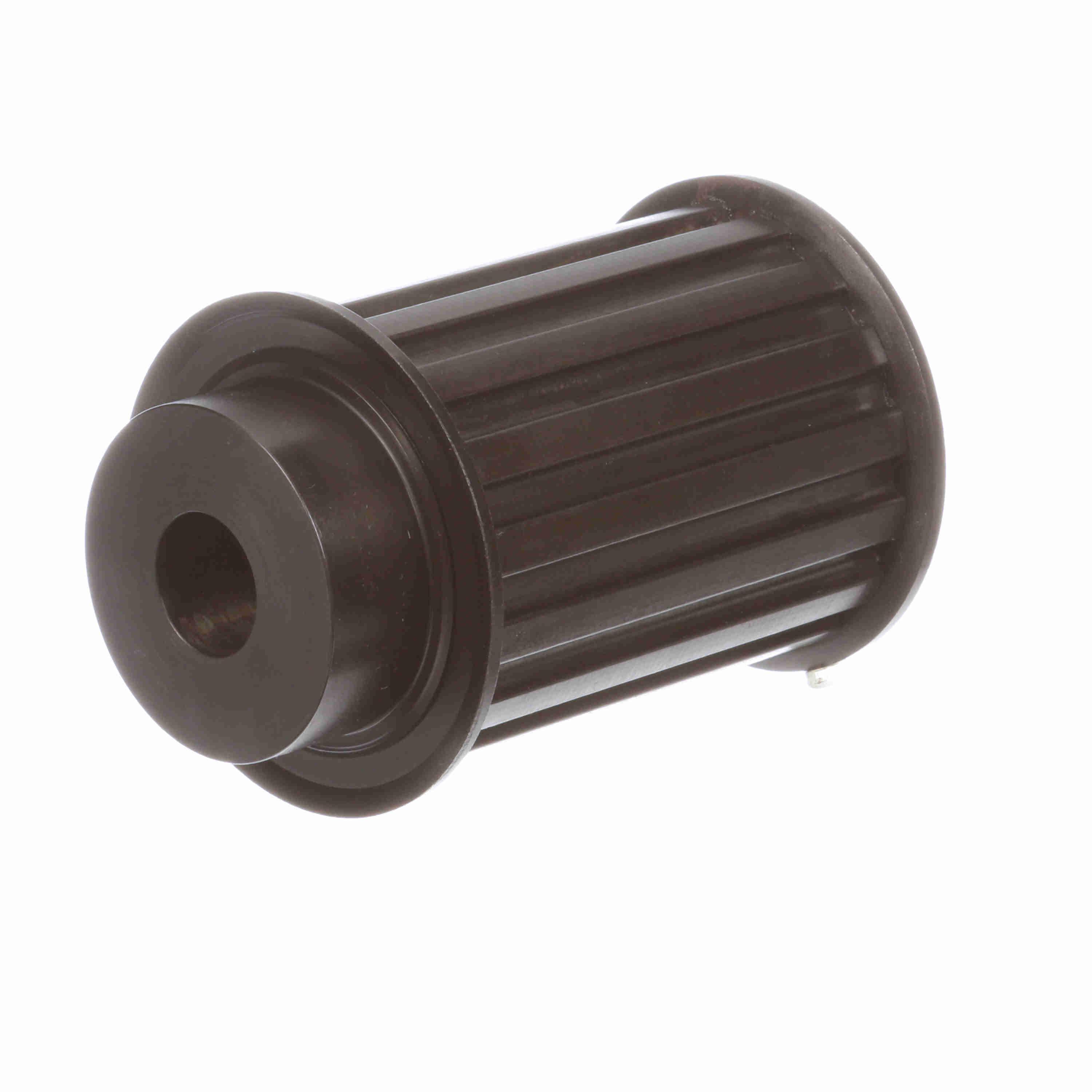
Browning® Gearbelt® 1055763 Type 2 Synchronous Timing Pulley With Flange, 3/4 to 1-1/8 in Bore, 2.492 in OD, 16 Grooves, 2.546 in Dia Pitch, 3-5/16 in W Face

Synchronous belt drives help reduce the problems of slippage, belt stretch, lubrication and metal to metal contact. They provide superior performance because power is transmitted by positive engagement of belt teeth rather than by friction, as in conventional belt drives.
-
BrandBrowning®
-
UPC662289272792
-
Manufacturer Part Number1055763
-
CountryUSA
-
Face Width3-5/16 in
-
Bushing TypeMPB
-
Pitch1/2 in
-
Pitch Diameter2.546 in
-
Flange Diameter2-7/8 in
-
TypeType 2
-
Hub Diameter1-7/8 in
-
Hub Projection3/4 in
-
Number of Grooves16
-
Outside Diameter2.492 in
-
Bore Diameter3/4 to 1-1/8 in
-
Overall Length4-1/16 in
-
Suitable For Use With3 in W H300 Type Belt
- Constant speed, no slip, no creep, minimum backlash, because of the positive grip of the belt teeth with pulley grooves
- High modulus strength member, needs minimum take-up
- Freedom from initial belt tension, reduces bearing loads, increases life
- Compact design Gearbelt® belts permit smaller pulleys, shorter centers and narrow belts
- Lightweight, high horsepower-to-weight ratio makes Gearbelt® drives ideal for any application where weight is an important factor
- Less heat, because Gearbelt® drives generate virtually no friction
- No lubrication required
- Wide load capacity range
- Wide belt speed range
-
Alternative Part Number16HB300
-
UNSPSC26111807
-
Package Description1/PK
-
Warranty1 Year
-
Instruction/Installation Manual
-
Specification Sheet
-
Catalog
Recently Viewed

Browning® Gearbelt® 1055763 Type 2 Synchronous Timing Pulley With Flange, 3/4 to 1-1/8 in Bore, 2.492 in OD, 16 Grooves, 2.546 in Dia Pitch, 3-5/16 in W Face
Synchronous belt drives help reduce the problems of slippage, belt stretch, lubrication and metal to metal contact. They provide superior performance because power is transmitted by positive engagement of belt teeth rather than by friction, as in conventional belt drives.
Gates® Power Transmission PowerGrip® 775H100 Heavy Timing Belt, 1 in W, 77-1/2 in OAL, 1/2 in Pitch, 155 Teeth, Neoprene
The trapezoidal tooth profile of PowerGrip™ Timing belts offers a maintenance-free and economical alternative to conventional chain drives and is well suited for use in positioning applications.

