

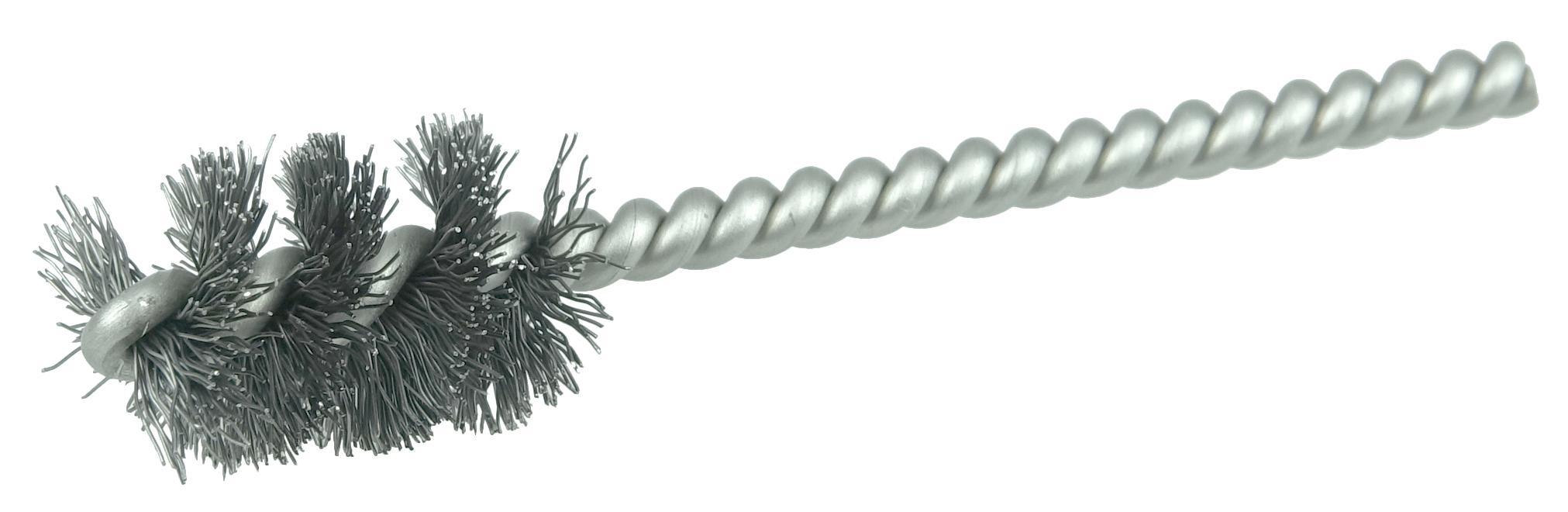
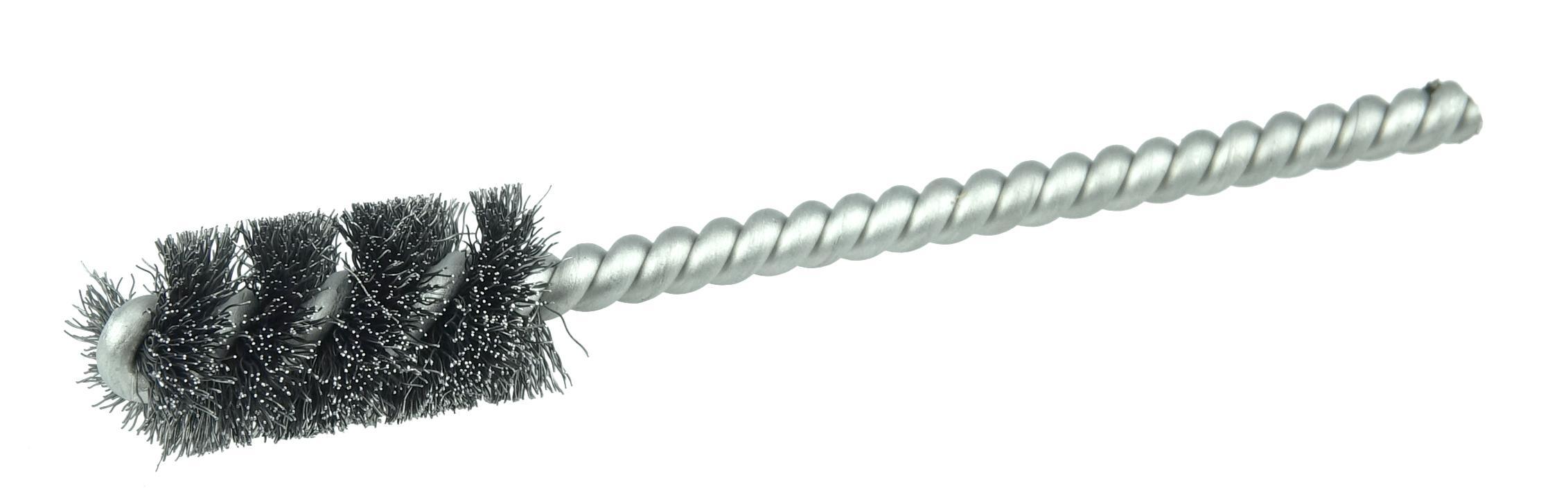
Weiler® 21075 Round Wire Power Tube Brush, 5/8 in Dia x 1 in L, 3-1/2 in OAL, 0.005 in Dia Filament/Wire, Steel Fill

Weiler® 21075 Round Wire Power Tube Brush, 5/8 in Dia x 1 in L, 3-1/2 in OAL, 0.005 in Dia Filament/Wire, Steel Fill
-
BrandWeiler®
-
UPC012382210755
-
Manufacturer Part Number21075
-
CountryUSA|Canada
-
Filament/Wire Diameter0.005 in
-
Fill MaterialSteel
-
TypeRound Wire
-
Handle TypeSingle Stem
-
Overall Length3-1/2 in
-
Brush Diameter5/8 in
- Single spiral of crimped wire fill for a more flexible brushing action
| Competitor Name | Cross-Reference Number |
|---|---|
| Fastenal | 0202203 |
| Berkshire eSupply | MK5521075 |
| MSC | 75850487 |
-
UNSPSC27113002
-
Package Description10/PK
-
Standards/ApprovalsANSI B165.1|CSA Approved
-
Catalog
Recently Viewed
Weiler® 21075 Round Wire Power Tube Brush, 5/8 in Dia x 1 in L, 3-1/2 in OAL, 0.005 in Dia Filament/Wire, Steel Fill
Weiler® 21075 Round Wire Power Tube Brush, 5/8 in Dia x 1 in L, 3-1/2 in OAL, 0.005 in Dia Filament/Wire, Steel Fill

10.3-OZ CONSTRUCTION ADHESIVE-JWH268999 >
8-OZ ELMERS PROBOND ADVANCED GLUE-JWH300420>
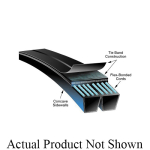
Gates® Power Transmission Super HC® PowerBand® 6/5V1800 Banded Heavy Duty V-Belt, 5V Section, 5/8 in W Top, 180 in L Outside, 35/64 in THK, Chloroprene
Combines the strength of a wrapped belt construction with the economies of a narrow section V-belt. Transmits more power in a given space and allows more compact drive design than classical section V-belts. In short, it offers you more power and considerably reduces the space needed. This significantly cuts the overall drive cost. Super HC™ V-belts also have exclusive Gates construction features for longer life on your drives.
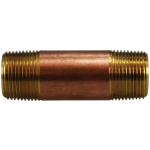
HCI Preferred Supplier 40086 Standard Pipe Nipple, 3/4 in Nominal, 4 in L, Brass, NPT End Style
HCI Preferred Supplier 40086 Standard Pipe Nipple, 3/4 in Nominal, 4 in L, Brass, NPT End Style
20-1/2" - 29" CAT-1 FORGED TOP LINKS-HIG00332 >

